The Scene
The story starts on Kingston's streets, where sound systems ruled. By the late 1950s, mobile rigs—trucks hauling generators, turntables, and towering speaker stacks—had become how Jamaicans heard music. Tom the Great Sebastian, run by Chinese-Jamaican businessman Tom Wong, was the first commercially successful operation. But by the mid-1960s three names dominated: Clement “Coxsone” Dodd, Duke Reid, and King Edwards. These weren't DJs. They were entrepreneurs, cultural kingpins, taste-makers. Competition was vicious. To keep dancers loyal, you needed exclusive music—songs no rival system could play.
That hunger for exclusivity created a peculiar practice. Around 1968, producers began cutting one-off acetate discs called dubplates—soft wax pressings made to test a song's potential before manufacturing hundreds of singles. Sound system operators played these exclusives to judge crowd reaction. Then something happened. At Duke Reid's Treasure Isle studio, engineer Byron Smith was cutting a dubplate of the Paragons' “On The Beach” for Ruddy Redwood's sound system when he forgot to bring the vocal track back in. Redwood kept the instrumental version. That night, he played it at a dance with his deejay Wassy toasting over the rhythm. The crowd went wild, singing the lyrics themselves, filling the space where the voice should have been. Redwood had to loop the instrumental for half an hour.
That hunger for exclusivity created a peculiar practice.
Bunny Lee witnessed this. The next day, he told King Tubby they needed more instrumental tracks. But Tubby's innovation was making these versions more than simple backing tracks. Working at his four-track home studio in Waterhouse—a converted backyard space he'd built in 1971—he treated the mixing desk like an instrument. He'd drop vocals in and out mid-phrase, isolate the bass until it became a physical force, spin the delay on the Space Echo until horns disappeared into thin wisps of sound. By 1973, three producers—Lee “Scratch” Perry, and the team of Herman Chin Loy and Errol Thompson—simultaneously recognized there was a market for these dub versions as standalone albums, not just B-sides. Perry released Upsetters 14 Dub Blackboard Jungle, mixed with King Tubby. Dub as a named genre had arrived.
This wasn't just sonic experimentation. Jamaica gained independence in 1962, but by the 1970s Kingston was fractured by political violence, economic instability, and the weight of colonial memory. Dub's use of echo and reverb—techniques that made sounds seem to float in vast, empty space—became what scholar Michael Veal termed a “sonic metaphor for the condition of diaspora.” The fragmentation of the song surface mirrored the fragmentation of identity. In King Tubby's mixes, you could hear screeching tires, gunfire, police sirens. Kingston in sound: beauty and menace, memory and forgetting, all suspended in delay.
Key Players
Osbourne “King Tubby” Ruddock was a radio repairman first, musician second. Born January 28, 1941, he grew up on High Holborn Street in Central Kingston before moving to Waterhouse in 1955. He opened an electronics shop on Drumalie Avenue fixing televisions and radios—the tropical weather and rival sound system sabotage meant constant work. In 1958, he built his own sound system, Tubby's Hometown Hi-Fi, which became legendary for sheer volume and clarity. Tubby custom-built amplifiers that could rattle zinc roofs. He even ran a pirate radio station briefly in the early 1960s, playing ska and R&B, until he heard police were hunting for illegal broadcasters. In 1964, he took a job as disc-cutter at Duke Reid's Treasure Isle. Tubby's genius was understanding electronics at the circuit level—he knew what the electrons did, as Mikey Dread put it. That knowledge let him modify equipment in ways no one else could. His custom-built MCI mixing desk had a parametric EQ with a large knob that could sweep the high-pass filter dramatically, narrowing any signal—horns, vocals—until it vanished into a thin squeal. Engineers called it “the big knob.” He was shot and killed outside his home in Duhaney Park on February 6, 1989, the victim of a robbery. He was 48.
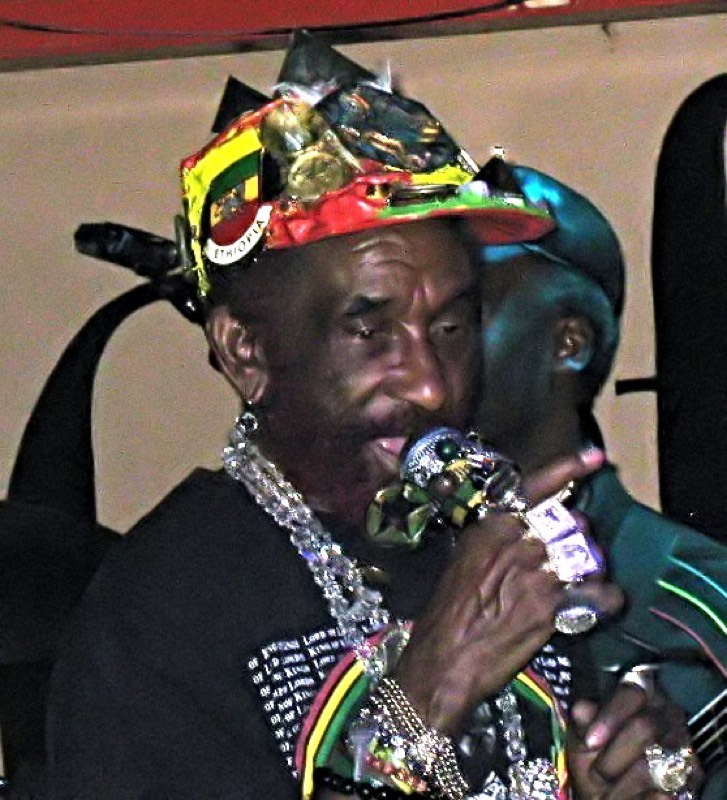
Lee “Scratch” Perry was the mad scientist to Tubby's technician. Born Rainford Hugh Perry in 1936 in Kendal, Hanover, he grew up steeped in his mother's Yoruba traditions. He arrived in Kingston in the late 1950s after what he described as a mystical experience with stones—their clash sent him to “King's Stone” for his graduation, as he told MOJO in 2019. He apprenticed at Studio One under Coxsone Dodd, then worked for Joe Gibbs at Amalgamated Records. Both relationships ended in acrimony over money. His 1968 single “People Funny Boy”—a direct insult to Gibbs—sold 60,000 copies in Jamaica alone and featured an innovative sample of a crying baby over a chugging beat that prefigured reggae's rhythmic signature. In 1971, Perry built the Black Ark in his backyard in Washington Gardens. It was a small, sweltering room with basic four-track equipment, but Perry treated it like an alchemical laboratory. He'd blow ganja smoke into microphones, bury master tapes in the garden, and work for days without sleep, food, or visitors. The walls were painted with mystical symbols, faces of Haile Selassie, occult diagrams. The studio burned down in 1978—Perry insisted he torched it himself. “Too much fighting and too much pressure,” he told Red Bull Music Academy. After that, he wandered between England and the US, erratic and brilliant, before finding stability working with Adrian Sherwood and Mad Professor in the late 1980s. He died in 2021 at age 85.
Augustus Pablo, born Horace Swaby, brought the melodica to dub—a reedy, breathy sound that became the genre's unexpected signature. He attended Kingston College in the late 1960s with Clive Chin and Tyrone Downie. A young friend at school lent him a melodica—the instrument was used to teach music lessons—and Pablo began experimenting with it. When producer Herman Chin Loy saw him with the melodica in hand and asked if he could play, Pablo said yes. The next day, Chin Loy invited him to Randy's studio to record. “We just make music,” Pablo told Reggae Vibes in 1987. Between 1971 and 1972, he recorded tracks like “East Of The River Nile” and “Iggy Iggy” over rhythms laid by Familyman and Carly. His 1974 album This Is Augustus Pablo introduced the melodica to an international audience, and his 1976 collaboration with King Tubby, King Tubbys Meets Rockers Uptown, remains one of dub's essential recordings. Pablo's playing had an almost devotional quality, drawing from Rastafarian spirituality and classical music training.
Bunny Lee, born Edward O'Sullivan Lee, was a producer and impresario who worked closely with King Tubby throughout the 1970s. He witnessed the original dubplate accident at Treasure Isle and immediately understood its potential. Lee produced hundreds of tracks, many of them mixed by Tubby, and released them on albums like Dub from the Roots and The Roots of Dub. He was a hustler in the best sense—tireless, inventive, always looking for the next riddim. He died in 2020.
In 1971, Perry built the Black Ark in his backyard in Washington Gardens.
The Aggrovators were the house band for many of Tubby's productions—session musicians like Sly Dunbar, Robbie Shakespeare, and Carlton “Santa” Davis who laid down the rhythms that Tubby would later dismantle and reassemble. Their playing was tight, economical, leaving space for the mixing desk to work its magic.
Errol Thompson was the engineer at Randy's Studio 17 and Aquarius Studio, a pioneer in his own right. Working with Herman Chin Loy, Thompson helped establish dub as a commercial form. His 1970 work on Derrick Harriott's The Undertaker—one of the first purely instrumental reggae albums—showed that instrumental tracks could stand on their own. Thompson's mixes were cleaner, more precise than Perry's chaotic experiments, but no less imaginative. He died in 2004.
Between 1971 and 1972, he recorded tracks like "East Of The River Nile" and "Iggy Iggy" over rhythms laid by Familyman and Carly.
Scientist, born Hopeton Brown, was King Tubby's protégé who took dub into the 1980s with albums themed around science fiction, horror films, and space exploration. He's been outspoken about royalty issues in the industry, telling United Reggae that companies like Greensleeves were “basically breaking the law” by releasing tracks without proper contracts with artists. “There is no such document trail,” he said, referring to alleged agreements between producers like Junjo Lawes and artists.
Defining the Sound
Dub is reggae with the vocals stripped away. But that's like calling a cathedral a building with the roof removed. What remains is the riddim—the drum and bass foundation, now exposed and monumental. The bass guitar in dub isn't accompaniment; it's architecture. Often mixed louder than anything else, it carries the melody, the rhythm, the emotional weight. Robbie Shakespeare's bass lines were liquid and muscular, moving in slow waves you felt in your chest. The kick drum and snare, usually played by Sly Dunbar or Carlton Davis, were crisp and minimal, leaving vast spaces between hits. That space is where dub lives.
The Roland Space Echo was the essential tool, a tape-delay unit that fed sound back into itself, creating cascading echoes that stretched into infinity. King Tubby and Lee Perry used it obsessively. A snare hit would ricochet across the stereo field, each echo slightly degraded, slightly different. Reverb—often from spring reverb tanks—made everything sound like it was recorded in a vast, empty warehouse or a subterranean cave. These weren't subtle effects. Tubby would drop the entire mix out except for the bass, then bring back a fragment of vocal—just a single word or syllable—treated with so much delay it became abstract, a ghost of meaning. He'd filter the horns with his parametric EQ until they sounded like they were underwater, then sweep them back into clarity.
A snare hit would ricochet across the stereo field, each echo slightly degraded, slightly different.
Lee Perry's Black Ark had even more idiosyncratic character. His four-track setup forced him to bounce tracks, layering sound on sound until the tape hiss became part of the texture. He'd use unconventional objects as percussion—tapping on the mixing desk, rattling chains, scraping metal. He claimed to blow ganja smoke into microphones so the weed would “get into the song.” Whether literal or metaphor hardly matters—the point is that Perry treated recording as ritual, as magic. His mixes were dense, chaotic, alive. Instruments would appear suddenly, pan wildly left and right, disappear mid-phrase. He'd overdub bird sounds, thunder, snippets of conversation. The result was music that felt organic and hallucinogenic, even though every effect was created with tape machines and spring reverbs.
What made dub distinctive was the emphasis on texture and space over melody and harmony. A horn line might play once, then echo ten times, each repetition slightly quieter, slightly more distant. Drums would drop out entirely, leaving just bass and reverb, then snap back with physical force. This wasn't background music. It demanded attention. David Toop called it “a long echo delay, looping through time...turning the rational order of musical sequences into an ocean of sensation.” You weren't listening to songs. You were inside them, moving through architecture made of sound. The dub mix was the performance, and the mixing desk was the instrument. As Prince Jammy put it: “Dub mean raw riddim. Dub jus' mean raw music, nuttin water-down. Version is like your creativeness off the riddim, without voice.”
Stories
The night that changed everything happened at a Kingston dance in 1968. Ruddy Redwood, a sound system operator, had just picked up a dubplate from Treasure Isle—the Paragons' “On The Beach.” Engineer Byron Smith had made a mistake, leaving the vocal track off entirely. Redwood didn't catch it until he dropped the needle in front of a packed crowd. Instead of disaster, something magic happened. His deejay Wassy started toasting—rapping, essentially—over the bare riddim, and the dancers began singing the lyrics themselves, filling the absence where the voice should have been. The energy was electric. Redwood couldn't move on—the crowd wouldn't let him. He looped that instrumental for half an hour straight while dancers packed the floor. The next morning, Bunny Lee, who'd witnessed the whole thing, went straight to King Tubby. “Them people love it,” he said. “We need more of these.” They started with Slim Smith's “Ain't Too Proud To Beg,” but Tubby didn't just mute the vocals. He played with the structure, bringing fragments of voice in and out, letting the riddim breathe. They called these new creations “versions,” and within months, every studio in Kingston was making them.
Lee Perry's Black Ark wasn't just a studio—it was a temple, a laboratory, a madhouse. Built in his backyard in Washington Gardens in 1971, it was a small, sweltering room with walls painted in mystical symbols, faces of Haile Selassie, occult diagrams. Perry had only a four-track recorder, forcing him to bounce tracks repeatedly until the tape hiss became texture. He'd work for days without sleeping, refusing visitors or phone calls, barely eating. “I was doing a song and then another song come into my mind, so I go down to the studio again,” Perry told Red Bull Music Academy, describing one typical night. “I go to bed at about six o'clock in the morning.” He claimed he buried master tapes in the garden to “season” them, that spirits spoke to him through the mixing desk. “The music always come from dream,” he told MOJO in 2019. “The invisible being that talk, you hear words from nowhere. The Father God, him touch you sometime.” Whether literal or metaphor, the music that emerged between 1973 and 1978 was unlike anything else—raw, unstable, alive. Albums like Max Romeo's War Ina Babylon and Junior Murvin's Police and Thieves had a quality of barely controlled chaos, as if the songs might fly apart at any second. When the Black Ark burned in 1978, Perry told everyone he'd torched it himself. “Too much fighting and too much pressure,” he said. The stress of the music business, rival producers, hangers-on—it all became too much. He walked away from the ashes and never looked back. Decades later, in December 2015, his Swiss “Secret Laboratory”—another private workspace crammed with paintings, costumes, and music files—also burned. This time it was an accident: Perry had been working until 6 a.m., forgot to blow out a candle sitting on top of a Bible. “When everything was happening, I didn't know what was going on,” he told Red Bull Music Academy. “Then I realised it was time for me to wake up and recognise that this is the second judgement.”
King Tubby's secret weapon was a modified MCI mixing desk he'd bought from Byron Lee's Dynamic Studios. The desk had a parametric EQ with a large rotary control—engineers called it “the big knob”—that could sweep a high-pass filter across any signal. In Tubby's hands, it became an instrument. He'd isolate a horn section, then slowly turn the knob, narrowing the frequency range until the horns sounded like they were underwater, then gone entirely—just a thin, whistling squeal. Then he'd sweep it back, and suddenly the horns were there again, full and bright. This wasn't subtle. It was dramatic, physical, theatrical. Tubby understood electronics at the circuit level—he knew exactly what each component did, how the electrons moved through the system. That knowledge let him modify equipment in ways other engineers couldn't imagine. Where most producers treated the mixing desk as a tool, Tubby played it with precision, intuition, and complete command. As Daddy U-Roy told I NEVE KNEW TV, Tubby's genius was that he could hear possibilities others couldn't—he'd take a simple riddim and transform it into something otherworldly through his mastery of the board.
Competition between Kingston's sound systems was ruthless. If you ran a sound system, you needed exclusive dubplates—tracks no other system could play—to keep dancers loyal. Producers would cut multiple versions of the same riddim, each with different mixes, and sell them to rival systems. Sometimes sabotage was involved. Operators would scratch labels off records so competitors couldn't identify songs. Some posted guards at dances to prevent equipment theft. Steve Barrow described one typical scene at a Tubby dance: “the crowd did a quick double take and then went wild, pushing down the fence until it was flattened, and then rushed in, knocking speaker boxes flying.” This atmosphere of rivalry and secrecy pushed engineers to constantly innovate. A King Tubby mix sounded like nothing else. Neither did a Lee Perry production. The sound systems weren't just playing music—they were testing laboratories where new forms were developed in real time, judged by the immediate physical response of dancers. If a mix worked, if it made the crowd move, it was good. If it didn't, you went back to the studio and tried again. This direct feedback loop drove dub's rapid evolution in the 1970s.
"The invisible being that talk, you hear words from nowhere.
On February 6, 1989, King Tubby was returning from his Waterhouse studio after a late mixing session. He pulled up outside his home in Duhaney Park just before midnight. Kingston had become dangerous by then—political violence, gang warfare, economic collapse. As Tubby stepped from his car, two men approached. It happened quickly. Shots. Tubby fell. He was 48 years old. The police said it was a robbery, but Tubby's death sent shockwaves through Kingston's music community. He'd trained a generation of engineers—Prince Jammy, Scientist, Hopeton Brown—and his mixing techniques had influenced producers worldwide. In the weeks after his murder, sound systems across Kingston played Tubby's dubs in tribute. The deep bass, the echoing snares, the space he'd carved into music—it all still sounded like the future, even as its creator was gone.
Legacy and Influence
Dub's influence extends far beyond reggae. In the late 1970s, British punk bands discovered it. The Clash worked directly with Lee Perry and Mikey Dread—their album Sandinista! featured extended dub workouts that baffled some fans but pointed toward the genre's flexibility. The post-punk movement, especially bands like Public Image Ltd (featuring bassist Jah Wobble), the Pop Group, and Killing Joke, absorbed dub's use of space, bass weight, and studio effects. Adrian Sherwood's On-U Sound label in London became a nexus for dub-influenced post-punk, releasing records by New Age Steppers, Dub Syndicate, and African Head Charge that fused dub with industrial music, funk, and African rhythms. In Bristol, dub's echo chamber aesthetics helped birth trip-hop—Massive Attack's Blue Lines owes a clear debt to King Tubby's spatial sense and bass pressure.
In the 1990s, dub became foundational to electronic music. Jungle and drum and bass emerged from soundsystem culture—the same Jamaican tradition that birthed dub—and carried forward the emphasis on bass weight and the manipulation of time through breakbeats. Dubstep, which emerged in South London in the early 2000s, is essentially dub slowed down and updated with digital production tools. Producers like Burial, Skream, and Digital Mystikz cited King Tubby and Lee Perry as primary influences, and dubstep's characteristic wobbling basslines and half-time drums are direct descendants of dub's riddim-centric approach. Even house and techno producers, from Larry Heard to Basic Channel, absorbed dub's emphasis on space, repetition, and the mixing desk as instrument. The “dub techno” subgenre—minimalist, echo-drenched, hypnotic—is King Tubby's vision translated into 4/4 time.
Dubstep, which emerged in South London in the early 2000s, is essentially dub slowed down and updated with digital production tools.
Beyond sound, dub pioneered the concept of the remix. Before Tubby, remixes didn't exist in popular music—you recorded a song, maybe an instrumental version, and that was it. Tubby and Perry showed that the mixing process itself was creative, that an engineer could be an artist. That idea became the foundation of hip-hop production, dance music, and modern pop. Every time a producer strips down a track, isolates the bass, adds delay to a vocal, they're working in a tradition King Tubby established in a backyard studio in Kingston. Yale professor Michael Veal argued that dub's use of reverb and fragmentation was a “sonic metaphor for the condition of diaspora,” that the genre's aesthetic reflected the experience of displacement, memory, and cultural dislocation. That metaphor resonates across the African diaspora's music—from Detroit techno to UK garage, from Miami bass to footwork. Dub didn't just influence genres. It changed how we think about what a recording can be.
British bands like The Clash, Public Image Ltd, and The Pop Group absorbed dub's use of space, bass weight, and studio effects, with direct collaborations between Lee Perry and punk musicians.
Bristol Sound / Trip-Hop
Massive Attack, Tricky, and Portishead built on dub's spatial production techniques and bass-heavy aesthetic to create trip-hop in early 1990s Bristol.
Dubstep
South London genre emerged in early 2000s as direct descendant of dub's bass pressure and half-time drums, with producers citing King Tubby as primary influence.
Dub Techno
Berlin producers like Basic Channel translated dub's emphasis on space, repetition, and echo into 4/4 techno framework in 1990s.
Hip-Hop Production
Dub pioneered the remix concept and studio-as-instrument approach that became foundational to hip-hop's production aesthetics and sample-based composition.