UK Post-Punk
From Manchester's Factory Records to London's art-punk experiments, the movement that made darkness dance
The Scene
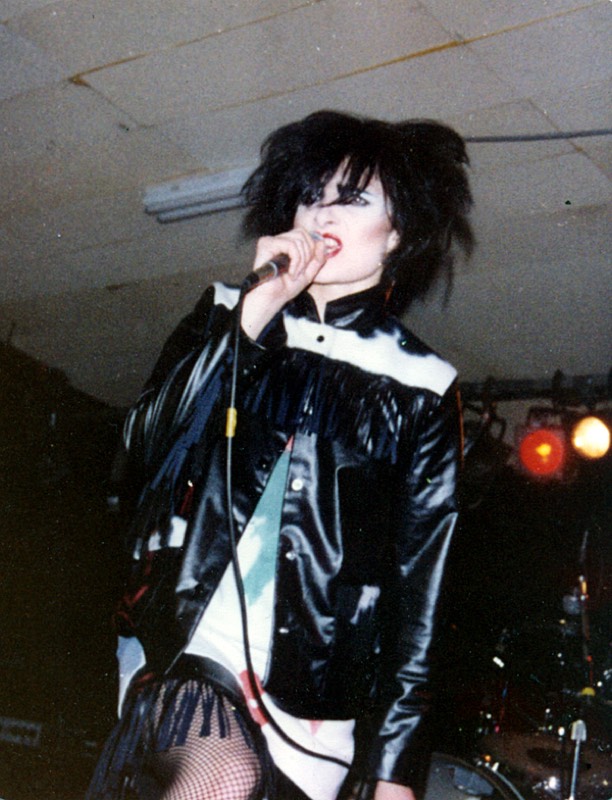
On 4 June 1976, forty people watched the Sex Pistols at Manchester's Lesser Free Trade Hall. Bernard Sumner and Peter Hook attended separately, both inspired to form what became Joy Division the next day. Mark E. Smith showed up with future Fall members. Tony Wilson saw his life's purpose clarified. Martin Hannett watched from the crowd. The gig has been mythologized—some claim half of Manchester's music scene was there—but the documented attendees read like a post-punk directory. Two weeks later, on 20 September 1976, Siouxsie Sioux and Steven Severin performed at London's 100 Club Punk Festival with borrowed musicians—Sid Vicious on drums, Marco Pirroni on guitar. Their 'set' consisted of a single twenty-minute improvisation based on the Lord's Prayer and 'Knocking on Heaven's Door,' Siouxsie wailing over a repetitive two-chord drone. Music journalist John Robb later called it 'proto post-punk,' recognizing that the space in the sound, the emphasis on atmosphere over technique, and the willingness to improvise rather than rely on rock conventions prefigured everything that followed.
By late 1977, punk was calcifying. On 26 November, Sounds magazine published Jon Savage's 'New Musick' editorial, describing bands like Siouxsie and the Banshees, Wire, and the Slits as exploring 'harsh urban scrapings/controlled white noise/massively accented drumming.' Three days later, Siouxsie and the Banshees recorded their first John Peel session for BBC Radio 1. David Stubbs later claimed that performance—particularly 'Metal Postcard (Mittageisen)'—marked the band as 'the very first group to make the transition from punk to post-punk.'
Their 'set' consisted of a single twenty-minute improvisation based on the Lord's Prayer and 'Knocking on Heaven's Door,' Siouxsie wailing over a repetitive two-chord drone.
But post-punk wasn't just London and Manchester. In Bristol, the Pop Group were creating something more explosive. A deranged fusion of punk, dub reggae, free jazz, and horrific noise, they made British punk seem safely safety-pinned. Nick Cave described their music as 'unholy, manic, violent, paranoid and painful.' They were too punk for the punks. Mark Stewart, Gareth Sager, and Bruce Smith met at a youth club in a prefabricated building over a bombsite. 'I wouldn't call us friends,' Sager recalled. 'We were associates. I've always felt fortunate that the Pop Group were more like acquaintances than a band with your best mates.' In 1979, they hired Dennis Bovell to produce their debut Y, becoming the first rock group to let a dub producer run wild with their music. By 1981 they were done, torn apart by personal politics and the pull of avant-jazz. They paved the way for Fugazi's politicized dissonance, Massive Attack's soundscapes, and the dancefloor-friendly art-rock of Yeah Yeah Yeahs and Liars.
Key Players
Ian Curtis sang with a baritone that drew comparisons to Jim Morrison. He wrote lyrics independently of the music, filling notebooks with poetry that referenced Dostoevsky, Kafka, Nietzsche, and Ballard—exploring 'coldness, pressure, darkness, crisis, failure, collapse, loss of control.' 'He was so ambitious,' his wife Deborah recalled. 'He wanted to write a novel, he wanted to write songs. It all seemed to come very easily to him.' Mark Reeder met Curtis in 1974 at Rare Records, where Curtis was the only helpful staff member in a shop full of bearded elitists. 'Ian was totally into reggae music. Dub,' Reeder remembered. 'We talked about all kinds of stuff, and usually the topics would cross over from music to history and the war. He was fascinated by the war.' His epilepsy worsened as Joy Division's success grew. Seizures on stage became grimly regular. On 18 May 1980, he overdosed on phenobarbitone in a suicide attempt. The following evening, Joy Division played Derby Hall in Bury with Alan Hempsall of Crispy Ambulance and Simon Topping of A Certain Ratio sharing vocals while Curtis recovered. When Topping returned near the set's end, bottles flew at the stage. Curtis's final performance came on 2 May at the University of Birmingham, where the band premiered 'Ceremony.' On 17 May, the evening before Joy Division's first American tour, Curtis returned to his Macclesfield home. In his final interview weeks before—recorded for BBC Radio Blackburn's 'Spinoff' program before a gig at Preston Warehouse—Curtis had been asked about touring outside the UK. 'We've played in Europe already in Holland and Germany and we are going to America,' he'd said, though the band had been asked to tour for 'about three months or so' and were only going for 'about two weeks, three weeks.' His marriage was failing. He asked Deborah to drop the divorce. Then he asked her to leave him alone until morning, when he'd catch a train to Manchester. She agreed. Curtis spent the night watching Werner Herzog's Stroszek—a film about an ex-con's failed attempt to find happiness in America, ending in suicide. He listened repeatedly to Iggy Pop's The Idiot. On 18 May 1980, Curtis hanged himself in his Macclesfield kitchen. He was twenty-three.
Tony Wilson saw Joy Division at the Russell Club and immediately knew he'd witnessed something historic. 'I still don't know where Joy Division came from,' he later said. With Alan Erasmus, he founded Factory Records in 1978, operating from Erasmus's Didsbury flat. His philosophy was simple: complete artistic control for the artists, no written contracts. 'If you need a contract, you're already in trouble.' The 2002 film 24 Hour Party People, with Steve Coogan playing Wilson, captured his contradictions—the Cambridge-educated socialist who loved the Situationists, the TV presenter turned label boss who lost millions on The Haçienda but never stopped believing in music's transformative power. Wilson died in 2007 from kidney cancer, buried in Southern Cemetery with the catalogue number FAC 501.
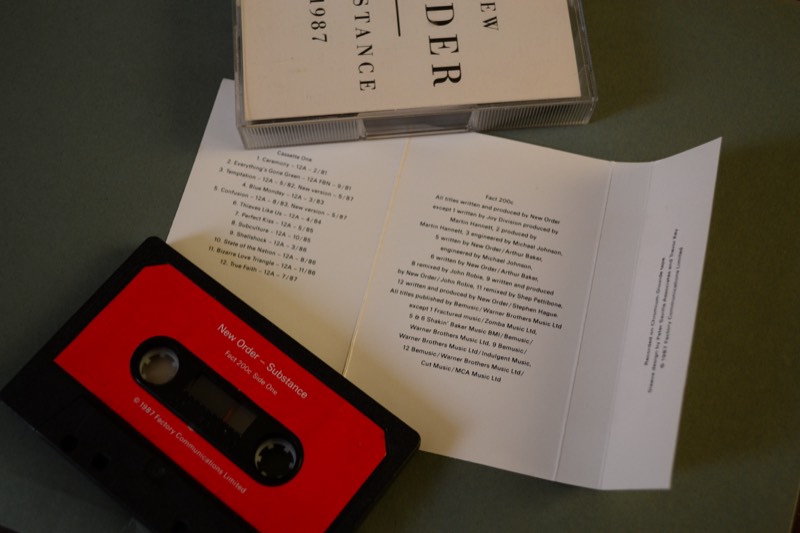
Factory Records catalogue number FAC 200. Peter Saville's sleeve designs cost more to print than the records earned — the beautiful economics that defined the label.
Peter Hook played bass high on the neck, competing with Bernard Sumner's distorted guitar. 'When Hooky played low, he couldn't hear himself,' Sumner explained. Curtis was 'the Spotter,' Hook recalled. 'Ian would be sat there, and he'd say, “That sounds good, let's get some guitar to go with that.” You couldn't tell what sounded good, but he could, because he was just listening. That made it much quicker, writing songs. Someone was always listening.' Hook remains the most candid Joy Division survivor, touring Unknown Pleasures and Closer in their entirety with Peter Hook & the Light, openly critical of how New Order operates without him. 'I'm not trying to impersonate Joy Division—I'm celebrating it,' he's said of these performances. 'It'd be impossible to impersonate Joy Division.'
Martin Hannett was the producer who turned Joy Division's live energy into something spatial and ghostly. He recorded drums in studio stairwells, used AMS digital delays to create stuttering synth effects, treated every element until the band initially hated the results. 'On the second album, Closer, it was a bit less subtle,' Hook recalled of Hannett's overdubbing. But Hannett created post-punk's sonic template—the sound that defined Factory Records and influenced decades of production.
In his final interview weeks before—recorded for BBC Radio Blackburn's 'Spinoff' program before a gig at Preston Warehouse—Curtis had been asked about touring outside the UK.
Mark E. Smith formed the Fall after seeing the Sex Pistols at the Lesser Free Trade Hall in 1976, wanting to combine 'primitive music with intelligent lyrics.' He churned through sixty-six musicians across forty years while maintaining a singular vision of repetitive, confrontational, literate post-punk. Curtis cited the Fall in his final interview as one of the few new groups he admired, calling them 'mostly old Factory groups really.'
Defining the Sound
Post-punk kept punk's rawness but rejected its three-chord simplicity. The bass became melodic, often carrying the tune. Peter Hook played his bass high on the neck, competing with Bernard Sumner's distorted guitar that could only work at full volume. Steve Hanley of the Fall developed circular basslines that became the band's rhythmic foundation from Hex Enduction Hour through the late 1990s. Steven Severin created melodic bass parts that let Siouxsie and the Banshees' guitars explore harsh urban scrapings rather than conventional chord progressions. Jah Wobble's bass carried the melodic weight in Public Image Ltd while Keith Levene's guitar created abrasive textures.
Drummers abandoned standard rock patterns. Stephen Morris of Joy Division cited Neu!'s Klaus Dinger and Can's Jaki Liebezeit as influences, along with Siouxsie and the Banshees' Kenny Morris, who 'played mostly toms' with 'the sound of cymbals forbidden.' The result was motorik, almost tribal—steady, circling, creating tension through repetition rather than fills. 'The first time I saw Ian being Ian onstage, I couldn't believe it,' Stephen Morris recalled. 'The transformation to this frantic windmill.' Budgie, who replaced Kenny Morris in the Banshees, brought precision that balanced the band's experimental impulses. Karl Burns of the Fall, playing alongside Paul Hanley in a two-drummer lineup for Hex Enduction Hour, created a grinding, relentless rhythm that Mark E. Smith called 'like a steamroller.'
'The first time I saw Ian being Ian onstage, I couldn't believe it,' Stephen Morris recalled.
Space mattered more than density. Martin Hannett's production on Unknown Pleasures—drums recorded in stairwells, AMS digital delays creating stuttering synth effects—turned Joy Division's live energy into something cerebral and ghostly. The Pop Group hired Dennis Bovell to produce Y, letting a dub producer reshape rock music with echo and space. Wire stripped rock to its skeleton on Pink Flag and Chairs Missing, creating minimal, angular songs. Andy Gill of Gang of Four abandoned conventional power chords for scratchy, angular textures that merged Marxist politics with funk.
The influences came from outside punk: krautrock's motorik rhythms, dub reggae's echo and space, free jazz's improvisational chaos, Velvet Underground's minimalism. Curtis listened to reggae when he worked at Rare Records in the early 1970s. Public Image Ltd drew from Beefheart and dub. The Pop Group fused punk with free jazz. This wasn't just faster rock. It was a complete reimagining of what rock could be.
Stories
In May 1978, the Russell Club on Royce Road—a social club for bus drivers from the nearby depot—became The Factory for one night a week. Tony Wilson, Alan Erasmus, and promoter Alan Wise launched these Friday nights showcasing local bands. The venue sat at the northeast corner of the since-demolished Hulme Crescents. Terrible acoustics. Capacity maybe two hundred. Joy Division, the Durutti Column, and Cabaret Voltaire all played there. Peter Saville designed flyers. On 13 September 1978, Factory Records released A Factory Sample—an EP featuring four bands from those club nights. The 7-inch cost more to manufacture than they charged, losing five pence on every copy sold when it became successful. Factory had established its aesthetic: no contracts, complete artistic freedom, design as important as music.
On 7 April 1980, Ian Curtis overdosed on phenobarbitone. The next evening, Joy Division were scheduled to play Derby Hall in Bury. Curtis was too ill to perform. The band played with Alan Hempsall of Crispy Ambulance and Simon Topping of A Certain Ratio sharing vocal duties. When Topping returned near the set's end, bottles flew at the stage. Curtis's final performance came on 2 May at the University of Birmingham, where the band premiered 'Ceremony'—one of the last songs Curtis wrote, later recorded by New Order. On 17 May, the evening before Joy Division's first American tour, Curtis returned to his Macclesfield home. In his final interview weeks before, recorded for BBC Radio Blackburn's 'Spinoff' program, Curtis had been asked about touring outside the UK. 'We've played in Europe already in Holland and Germany and we are going to America,' he'd said, noting they were only going for 'about two weeks, three weeks' despite being asked to tour for 'about three months or so.' His marriage was failing; Deborah had filed for divorce. He asked her to drop it. Then he asked her to leave him alone in the house until morning. She agreed. Curtis spent the night watching Werner Herzog's Stroszek and listening repeatedly to Iggy Pop's The Idiot. The next morning, Deborah returned to find him dead. Manager Rob Gretton later said they all 'made the mistake of not thinking his suicide was going to happen.'
Legacy and Influence
Post-punk's influence spread through underground networks to shape alternative rock, gothic rock, indie, and electronic music. Joy Division's sparse arrangements and Curtis's baritone became the template for gothic rock—though Martin Hannett's description of their sound as 'dancing music with Gothic overtones' captured something more complex than the genre that followed. Bauhaus, Sisters of Mercy, and the Cure (whose Robert Smith had briefly been a Banshee) built entire careers on foundations Joy Division laid. Siouxsie and the Banshees were cited by the Smiths (Johnny Marr praised John McGeoch's guitar work on Juju), Radiohead (who covered 'Happy House'), and PJ Harvey. The Fall's influence runs through Pavement, Sonic Youth (who recorded an entire EP of Fall covers for John Peel), and LCD Soundsystem. The Pop Group paved the way for Fugazi's politicized dissonance, Massive Attack and Nine Inch Nails' larger-than-life soundscapes, and the dancefloor-friendly art-rock moves of Yeah Yeah Yeahs and Liars.
The post-punk revival of the early 2000s brought these sounds back into mainstream consciousness. The Strokes' Is This It in 2001 consciously referenced Television and Velvet Underground's minimalism. Interpol lifted Joy Division's aesthetic wholesale—the suits, the bass-driven melodies, the baritone vocals. Franz Ferdinand, Bloc Party, and the Rapture merged post-punk's angularity with dance rhythms, creating the dance-punk hybrid that dominated mid-2000s alternative rock. LCD Soundsystem's James Murphy explicitly acknowledged his debt to Factory Records. DFA's production borrowed heavily from Martin Hannett's spatial techniques. By the 2010s, a new wave emerged—Savages, Shame, Idles—proving post-punk's core principles remained vital forty years on.
Gothic Rock
Post-punk's dark atmospheres and Joy Division's sound directly spawned gothic rock; Bauhaus, the Sisters of Mercy, and others built on Martin Hannett's 'dancing music with Gothic overtones.'
New Wave
Post-punk emerged alongside and often overlapped with new wave; both rejected punk orthodoxy but new wave pursued pop accessibility while post-punk remained experimental.
Indie Rock
Factory Records' DIY infrastructure and artistic control model became indie rock's template; labels like Sub Pop and Creation Records directly cited Factory as inspiration.
Dance-Punk
Gang of Four's funk-inflected post-punk and The Haçienda's acid house connection influenced 2000s dance-punk revival through LCD Soundsystem, the Rapture, and !!!
Shoegaze
Siouxsie and the Banshees' atmospheric production and guitar textures on albums like A Kiss in the Dreamhouse influenced My Bloody Valentine and early shoegaze's wall-of-sound aesthetic.