Suicide
Alan Vega and Martin Rev started playing together in 1970, two guys from New York working out how to strip rock and roll down to its bones. Vega had come up as a visual artist, studying under the abstract expressionist Ad Reinhardt, the man who painted all-black canvases and declared them the last paintings anyone would ever need to make. Vega's light sculptures, built from junk scavenged off the depressed streets of seventies New York, carried the same austerity into three dimensions. Rev, raised in the Bronx on doo-wop and rhythm and blues, brought a droning Farfisa organ and a primitive rhythm box, building plodding, hypnotic pulses that had nothing to do with the prog-rock synth bands of the day (as Rev told Igloo Magazine in 2008, he never touched a real synthesizer until years later in the studio). Vega treated the microphone like a weapon and howled over the top, rockabilly moans dragged up from somewhere lower. Their early flyers, for a 1971 art-gallery show, billed them as a 'Punk Music Mass'—years before the Ramones or the Sex Pistols, before the word meant anything to anybody outside Lester Bangs's record reviews. Shows at CBGB frequently ended in chaos, and later tours opening for the Clash, Elvis Costello, and the Cars regularly ended in riots. Bruce Springsteen was listening: Alan Vega once heard 'State Trooper' off Nebraska and was sure, for a moment, that it was a lost Suicide track he'd forgotten writing. Widely acknowledged as no wave's godfather, Suicide's fingerprints turn up on Joy Division, the Jesus and Mary Chain, and virtually everything that called itself industrial or electro-punk afterward.
At a glance
- Active
- 1970–2016
- From
- New York City, USA
- Records in the issues
- 1 (1977), 1 of them a Start here pick
- Original label
- Red Star Records
Listen
In the issues
- NYC No WavePrincipal · 1977-1984
NYC No Wave is a music scene from Lower Manhattan, New York City, 1977–1984. Its principal artists include Suicide, Teenage Jesus and the Jerks, Sonic Youth and The Contortions. This issue covers 10 essential albums and 14 dated events.
- CBGB's 70s PunkSupporting cast · 1973-1982 · Members
CBGB's 70s Punk is a music scene from New York City, USA, 1973–1982. Its principal artists include Ramones, Television, Talking Heads and Patti Smith. This issue covers 10 essential albums and 15 dated events.
Records
Suicide
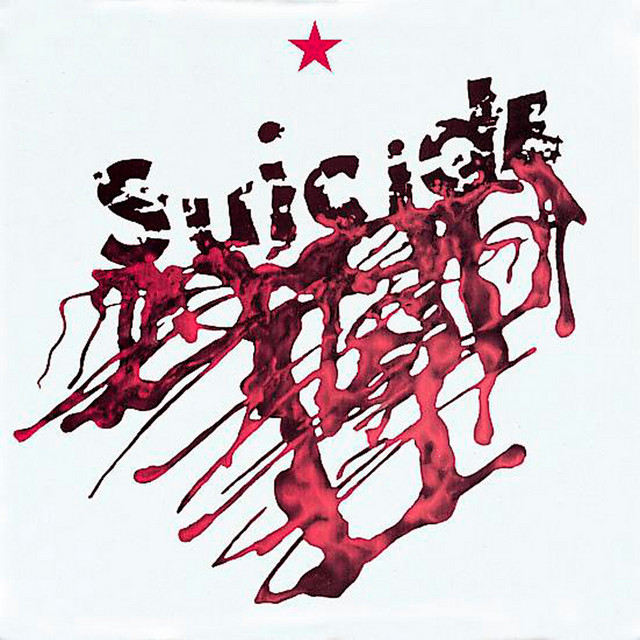
1977 · Start here in NYC No WaveOriginal release: Red Star Records · RS 1 · 12″ Vinyl · US 1977Suicide's self-titled debut, recorded in 1977, arrived as the first full documentation of a sound the duo had been building since 1970. Martin Rev's droning Farfisa and primitive rhythm box lay down a hypnotic, plodding pulse; Alan Vega howls, sneers, and preaches over the top, channeling rockabilly through something closer to dread. It landed at a moment when synthesizers were still associated with prog bands like Yes and Genesis—Rev has said the duo never set out to be an 'electronic band' in that sense, they simply were what they were, and got called punk years before the term meant anything. Songs like 'Ghost Rider,' 'Che,' and 'Cheree' carried punk's spirit while quietly laying groundwork for post-punk, industrial, synth-pop, electro, and techno. Bruce Springsteen was listening closely enough that Alan Vega mistook 'State Trooper,' off Nebraska, for a forgotten Suicide song of his own.
Listen on Spotify
Places
- Max's Kansas CityNew York City · 1965-1981 · NYC No Wave
The legendary Warhol-era club on Park Avenue South became an important venue for no wave performances in its final years, hosting Suicide and other scene pioneers.
Voices
Quotations from the issues, each matched word for word against the source it links to.
“They were riots. I used to jump in the audience and antagonize people. The sound was already antagonizing them. We chose not to be entertainers at that time. People came off the street to be entertained by our band and forget their problems for a while but when they come to a Suicide show they got the street right back in their faces and that along probably antagonized everybody.”
“I knew instinctively that Alan was going to be as far from the mainstream as I was.”
“We felt a part of no scene because there wasn't any. The sixties were ending miserably with the deaths of the three J's: Janis, Jimi and Jim. All within a month.”