NYC No Wave
Downtown Manhattan's anti-rock explosion that tore up the rules and built a new sonic language from noise, dissonance, and confrontation
The Scene
The story starts in 1970, not 1978. Alan Vega and Martin Rev formed Suicide in a New York hemorrhaging money and people. Vega had been making electronic junk sculpture before he picked up a microphone. Rev had a Farfisa organ and a primitive rhythm box. Together they stripped rock to its neurological core: pulse, drone, scream. Their shows at CBGB were disasters in the best sense—Vega diving into crowds that couldn't decide whether to dance or fight back, getting beaten up regularly. The music barely resembled rock anymore.
By 1973, another precursor emerged upstate. Jack Ruby formed in Albany with Randy Cohen on drums and synthesizer, Boris Policeband playing viola through an FM transmitter with police walkie-talkies strapped around his waist. They sounded insane. Thurston Moore would later call them “a band whispered about from the most inner circle of no wave knowledge,” pre-dating the aesthetic by years. When bassist George Scott III moved to New York, he brought that Albany approach with him: ignore convention, make the equipment do things it wasn't designed to do. He'd end up playing with James Chance and Lydia Lunch, planting those Albany seeds in downtown soil.
This was Lower Manhattan before gentrification, when artists could afford lofts along the Bowery and in Tribeca.
The geography mattered. This was Lower Manhattan before gentrification, when artists could afford lofts along the Bowery and in Tribeca. Walk down those rubble-filled blocks in the mid-seventies and you'd check to see if your wallet was still there. The city was bankrupt, drug-addled, dangerous. The Velvet Underground's legacy hung heavy over downtown, but a new generation wanted to push further into the void. Glenn Branca arrived from Boston in 1976, initially hoping to continue in experimental theater. Instead he formed Theoretical Girls after encountering the nascent noise scene. Rhys Chatham, working with La Monte Young's minimalist drones at The Kitchen, began his own experiments with massed electric guitars. The desolation seeped into the music. Lydia Lunch would later call the “Summer of Love” mythology a “bald-faced lie.” No wave was the sound of that disillusionment made manifest.
Everything crystallized in early 1978 when Artists Space, a white-walled gallery on Hudson Street, hosted a five-night festival organized by visual artists Michael Zwack and Robert Longo. The first three nights featured Rhys Chatham's Gynecologists and Glenn Branca's Theoretical Girls performing alongside his Daily Life project. The final two nights brought the four bands that would define the sound: DNA and the Contortions on Friday, Mars and Teenage Jesus and the Jerks on Saturday. Brian Eno, in town producing Talking Heads' More Songs About Buildings and Food, showed up on Diego Cortez's advice. What he witnessed wasn't punk's rebellion but something more radical—a complete rejection of rock tradition. These bands weren't trying to write better songs. They were dismantling the idea of what a song could be.
The final two nights brought the four bands that would define the sound: DNA and the Contortions on Friday, Mars and Teenage Jesus and the Jerks on Saturday.
The term “no wave” itself remains disputed. Some credit Lydia Lunch in an interview with Roy Trakin for New York Rocker. Others point to Chris Nelson of Mofungo. Moore claimed to have seen it spray-painted on CBGB's theater before it appeared in print. The name might have nodded to French New Wave cinema pioneer Claude Chabrol's remark, “There are no waves, only the ocean.” What mattered was the negation—no wave as rejection of new wave's commercial recuperation of punk energy. This wasn't about radio play. This was about making music that actively resisted commodification, that stayed ugly and unresolved. The scene burned hot and fast, mutating by the early eighties into dance-oriented mutant disco before collapsing, but its influence would ripple outward for decades.
Key Players
Alan Vega and Martin Rev of Suicide stood as the acknowledged godfathers, though they'd formed years before no wave coalesced. Vega's background in electronic sculpture informed his approach to sound—he treated the microphone like a weapon, his vocals somewhere between Elvis and a man being electrocuted. Glenn Branca would later state: “If you have to find out who the godfather of no wave was, it was Alan Vega.” Their 1977 self-titled album arrived like a transmission from a future where rock had been stripped to its essence. Rev's droning Farfisa and primitive rhythm box created a hypnotic pulse over which Vega howled, sneered, preached. Those early shows frequently ended in chaos.
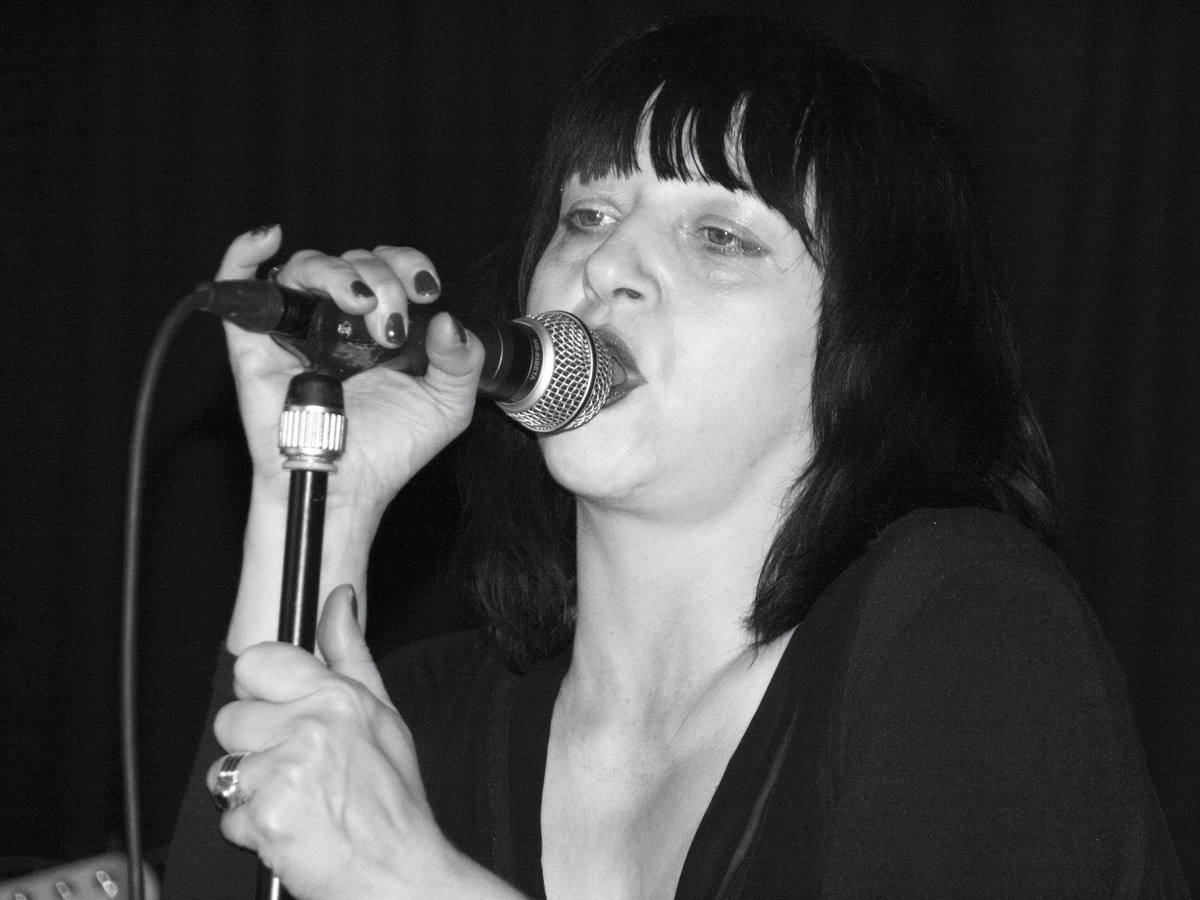
Lydia Lunch arrived in New York at sixteen and immediately became the scene's most confrontational voice. With Teenage Jesus and the Jerks, she played guitar like she was strangling it, her songs rarely exceeding two minutes and often collapsing into noise before they'd properly begun. James Chance recruited her to help form the band; both would appear on Eno's No New York compilation. When Robert Barry Francos interviewed Teenage Jesus in 1977 for FFanzeen, the band's contemptuous attitude nearly made him scrap the piece—their “attitude” was their gimmick, bullshit obnoxiousness for people who liked being assaulted as long as there was no physical threat. Lunch's aesthetic was deliberately abrasive, a necessary response to late-seventies decay. After Teenage Jesus disbanded, she formed Beirut Slump and 8 Eyed Spy, the latter featuring George Scott III. Her career would expand into spoken word and film, but those early no wave performances established her as downtown's most uncompromising artist.
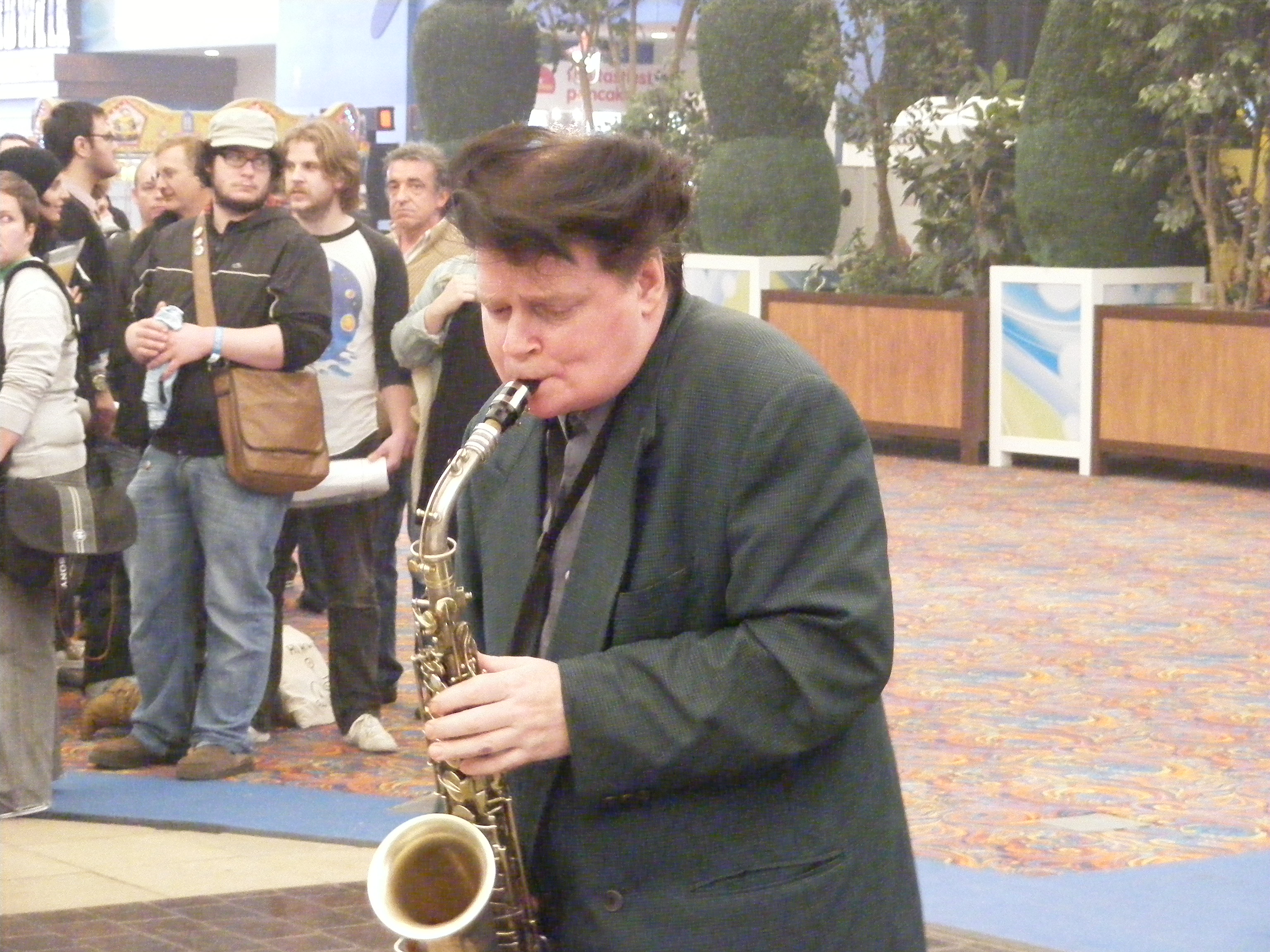
James Chance. His Contortions fused no wave noise with mutant funk and free jazz. On the No New York compilation, they were the wildest thing on a wild record.
Glenn Branca came from experimental theater but found his voice in electric guitar noise. Theoretical Girls, formed with Jeffrey Lohn after seeing rehearsals by the N. Dodo Band in a Chelsea space, participated in that crucial Artists Space festival. Branca's background with Rhys Chatham's Guitar Trio taught him how minimalist drones could be weaponized through volume and repetition. He would launch Neutral Records in 1982, releasing early Sonic Youth material, and his later guitar symphonies—massive pieces for four, six, eventually one hundred electric guitars—would take no wave's lessons about texture and dissonance into formal composition. Branca gave Thurston Moore and Lee Ranaldo their conceptual framework: the idea that guitars didn't have to follow blues scales or Chuck Berry riffs, that they could be retuned, prepared with objects, and used to explore harmonic series and overtones.
James Chance (sometimes performing as James White) brought a jazz and funk sensibility that made the Contortions the most danceable of the no wave groups, though their sound remained deliberately confrontational. His saxophone screamed and honked over locked-in grooves, his stage presence manic and aggressive. The Contortions included Jody Harris and Pat Place on guitars, Don Christensen on drums, George Scott III on bass, and Adele Bertei on Acetone organ—a lineup that could actually play, which made their choice to play this way all the more pointed. When Eno recorded them for No New York, Chance insisted on capturing everything “totally live in the studio, no separation between the instruments, no overdubs—just like a document.” The result preserved the band's raw, twitchy energy while hinting at the mutant disco that would follow.
Lunch's aesthetic was deliberately abrasive, a necessary response to late-seventies decay.
Brian Eno wasn't from the scene, but his decision to document it gave no wave its defining artifact. His production on No New York was intentionally minimal—he understood these bands didn't need his signature studio wizardry. On Mars' “Helen Fordsdale,” he put an echo on the guitar's click and used it to trigger compression on the whole track, creating a sound “like helicopter blades.” The album's original pressing included a lyric sheet printed inside the sleeve, forcing owners to tear it apart to read the words—a perfect no wave gesture. Eno's involvement brought press attention and legitimacy, though many of the bands later complained he should have stayed home. The tension between documentation and commercialization would haunt the scene until its dissolution.
Defining the Sound
No wave wasn't a genre with consistent features. An attitude that happened to use guitars, bass, and drums. What unified these bands was what they rejected: blues scales, rock's recycled riffs, punk's speed-for-speed's-sake, new wave's commercial sheen. Instead, they drew from minimalism, free jazz, and avant-garde composition. The guitars were often cheap Japanese Stratocaster copies, but in the right tuning with a drum stick jammed under the frets and the amplifier pushed to distortion, they sounded like church bells or sheet metal being torn. Sonic Youth, emerging slightly after no wave's peak, would systematize this approach—Moore and Ranaldo used dozens of alternate tunings, often dedicating specific guitars to specific songs, their instruments prepared with screwdrivers and other objects to alter timbre. Michael Azerrad described the revelation: “cheap guitars sounded like cheap guitars. But with weird tunings or something jammed under a particular fret, those humble instruments could sound rather amazing.”
The rhythm section rarely provided a solid foundation. Mars featured Nancy Arlen's drums as a stuttering, off-kilter pulse beneath Mark Cunningham's sliding bass and the atonal guitar interplay of Sumner Crane and China Burg. DNA took this further: Arto Lindsay's guitar sounded like it was being dismembered, Robin Crutchfield's organ added discordant stabs, and Ikue Mori's drums had no interest in keeping conventional time. The music emphasized texture over melody, repetition that never quite locked into a groove, driving rhythms that felt more like obsessive tics than danceable beats. La Monte Young's early downtown minimalism provided a template—long drones that exposed the harmonic series, sounds sustained until they revealed their interior architecture.
The music emphasized texture over melody, repetition that never quite locked into a groove, driving rhythms that felt more like obsessive tics than danceable beats.
Vocally, no wave ranged from Lunch's sneering provocations to Arto Lindsay's yelps to James Chance's manic saxophone-as-voice. No interest in prettiness or even traditional punk's angry clarity. Lunch described her approach as confrontational noise delivery, anti-commercial by design. The Contortions' funk grooves were deliberately destabilized, the saxophone lines jagged and dissonant even as the rhythm section locked in. Suicide stripped it down even further: just Rev's droning Farfisa and primitive rhythm box, Vega's vocals swooping from rockabilly homage to psychotic break. When Moore saw Minor Threat in 1982, he declared them “the greatest live band I have ever seen,” but Sonic Youth's music bore little resemblance to hardcore. Instead, they absorbed its intensity and the DIY network it had built, combining it with no wave's experimental bent.
By the early eighties, the sound was already mutating. ZE Records' Mutant Disco compilation in 1981 captured the scene's evolution toward dance music, incorporating hip hop, disco, punk, dub reggae, and world music influences. The abrasive reductionism that defined 1978 gave way to something more playful, more willing to let people move. But that original no wave sound—atonal, confrontational, texturally dense, rhythmically unstable—would resurface in noise rock, in Sonic Youth's alternative tunings, in the industrial music coming out of Chicago and Sheffield, in every band that decided ugliness and dissonance could be their own kind of beauty.
Stories
The Artists Space festival in early 1978 almost didn't produce No New York at all. When Brian Eno showed up for the final two nights—advised by Diego Cortez to check out this strange new scene—he was already in New York working on the Talking Heads album. What he saw on Friday night was DNA and the Contortions. Saturday brought Mars and Teenage Jesus and the Jerks. The music was so confrontational, so deliberately ugly, that it could have been dismissed as amateur hour. But Eno heard something else: a radical reimagining of what rock instrumentation could do. He proposed a compilation album, though his involvement would later be contentious. James Chance insisted the Contortions' tracks were “done totally live in the studio, no separation between the instruments, no overdubs.” Later, members of other bands grumbled that Eno should have stayed home. The tension captured no wave's central paradox: these artists wanted documentation but resisted the commodification that came with it.
Sonic Youth's formation traced directly back to this moment. Thurston Moore arrived in New York in early 1977, initially playing in bands called Room Tone and the Coachmen. After jamming with Stanton Miranda, whose band CKM featured Kim Gordon, Moore and Gordon began playing together under various names before settling on Sonic Youth in mid-1981—the name combined MC5's Fred “Sonic” Smith with reggae artist Big Youth. They played at Noise Fest that June at White Columns gallery, where Lee Ranaldo was performing with Glenn Branca's electric guitar ensemble. Moore watched Ranaldo's performance and declared Branca's ensemble “the most ferocious guitar band that I had ever seen in my life.” He invited Ranaldo to join Sonic Youth immediately. The three-piece played without a drummer until Richard Edson joined, beginning the band's evolution from pure noise into something resembling rock music, though always filtered through no wave's experimental lens.
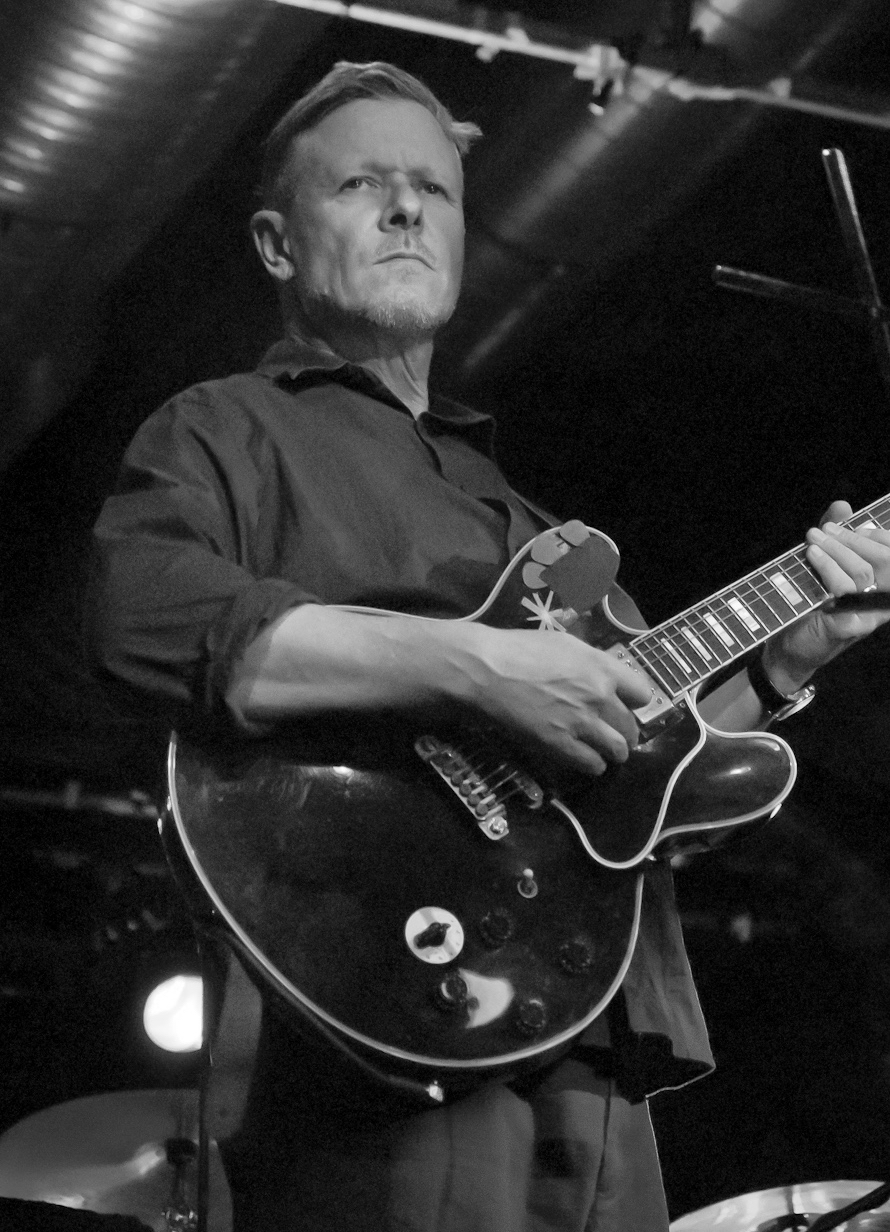
Michael Gira. Swans took no wave's aggression and stretched it into something monumental: crushing, ritualistic, relentless.
The scene's venues and labels operated on shoestring budgets and pure will. Branca's Neutral Records, launched in 1982, released Sonic Youth's first recordings as well as material by Y Pants, a band featuring Barbara Ess. ZE Records, founded in 1978, became another crucial outlet, eventually compiling the Mutant Disco collection that documented no wave's dance turn. Visual artists played an outsized role—the scene was as much about performance art and film as music. Barbara Ess organized the Just Another Asshole show and subsequent compilations. Colab organized The Real Estate Show, The Times Square Show, and the Island of Negative Utopia show at The Kitchen. In 1980, ABC No Rio Gallery opened on the Lower East Side, providing an ongoing home for no wave aesthetics. The East Village gallery scene from 1982 to 1986 was dominated by no wave's punk sensibility, the boundaries between visual art, music, and film deliberately porous.
July 4, 1999. Long after no wave had ended, its legacy nearly vanished in a single theft. Sonic Youth's instruments and equipment were stolen during a tour stop in Orange County, California. Almost thirty guitars and basses disappeared—instruments that had been prepared, modified, and tuned for specific songs over nearly two decades. Some were cheap Japanese Stratocaster copies from the early days, others custom-built, all of them irreplaceable. The theft forced the band to start from scratch, buying new instruments and trying to recreate the sounds they'd spent years developing. Over the next thirteen years, some instruments trickled back—recovered by police or returned anonymously—but many were gone forever. The 2006 album Rather Ripped was noted as a return to the band's earlier sound, partly due to the recovered instruments. That theft and recovery captured something essential about no wave: the music was inseparable from the specific physical objects used to make it, guitars prepared and tuned in ways that couldn't be easily replicated, sonic signatures built through years of experimentation with junk-store equipment and alternate tunings.
The scene's venues and labels operated on shoestring budgets and pure will.
The scene's influence on film created a parallel universe. No Wave Cinema emerged simultaneously with the music, centered in Tribeca and the East Village. As the Blank City documentary later documented, young artists like Nick Zedd, Richard Kern, and Jim Jarmusch bought 8mm cameras and filmed their pals without permits or rules—gorilla style. Black humor thrown into the mix by twentysomethings making films that validated the city's bankrupt, drug-addled rut. Filmmakers like Amos Poe, Eric Mitchell, Scott B and Beth B shot on handheld Super 8 cameras, working with available light in downtown nightclubs, on the street, in cramped apartments. Lydia Lunch appeared in Black Box (1978) as a dominatrix and in Vortex (1981) as a detective named Angel Powers. Musicians regularly acted in films; filmmakers played in bands. Vivienne Dick shot Beauty Becomes The Beast (1979) with Lunch and Pat Place. The aesthetic was deliberately unpolished, rejecting mainstream filmmaking conventions just as the music rejected rock tradition. When Coleen Fitzgibbon and Alan W. Moore's short film X Magazine Benefit was finally finished in 2009—shot in 1978 but edited on video decades later—it captured DNA, James Chance and the Contortions, and Boris Policeband in grainy black and white, preserving the gritty look and sound of an era that burned fast and left only fragments.
Legacy and Influence
No wave's immediate offspring was noise rock, a genre that wouldn't have existed without Downtown Manhattan's experiments with dissonance and texture. Sonic Youth became the most successful band to emerge from no wave's ashes, signing to major label DGC in 1990 and headlining Lollapalooza in 1995, but they never abandoned the aesthetic principles learned from Glenn Branca and the Artists Space generation. Their influence rippled outward: Stephen Malkmus of Pavement credited Sonic Youth with giving him “the idea and courage” to explore alternate tunings; Sleater-Kinney cited them as inspiration for their detuned guitar sound. As Kim Gordon told SLUG Magazine in discussing their major label work, they spent about $150,000 on Dirty but “everything went really smoothly”—they'd maintained their experimental approach even with bigger budgets. By the mid-eighties, bands like Big Black, the Butthole Surfers, and Pussy Galore were grouped under Village Voice editor Robert Christgau's dismissive “pigfucker” label, but they were all following paths no wave had blazed—abrasive, uncompromising, aggressively anti-commercial.
Regional scenes emerged in direct response to New York's example. The Kansai no wave movement in Osaka, Kobe, and Kyoto during the late seventies and early eighties featured bands like Aunt Sally, Inu, and groups centered around Hide and Jojo Hiroshige that would later feed into Japanoise. In Chicago, Weasel Walter of the Flying Luttenbachers began describing his scene as “Chicago no wave” in the early-to-mid nineties, connecting bands like Scissor Girls, U.S. Maple, and Brise-Glace to the New York lineage. The attitude spread: you didn't need expensive equipment or traditional training, you needed ideas and the willingness to push them to uncomfortable extremes. Industrial music, particularly the Chicago scene around Wax Trax! Records, absorbed no wave's confrontational aesthetic. Even grunge, in its noisier moments, owed a debt to Sonic Youth's experiments with feedback and alternate tunings. As Lee Ranaldo reflected in a 1995 interview, their approach to guitar—using alternate tunings, prepared instruments, and unconventional techniques—had opened doors for countless bands seeking to expand beyond traditional rock vocabulary.
In Chicago, Weasel Walter of the Flying Luttenbachers began describing his scene as "Chicago no wave" in the early-to-mid nineties, connecting bands like Scissor Girls, U.S.
The institutional recognition came decades later. In 2004, Scott Crary's documentary Kill Your Idols featured no wave pioneers Suicide, Teenage Jesus and the Jerks, DNA, and Glenn Branca alongside bands they'd influenced: Sonic Youth, Swans, Foetus. Between 2007 and 2008, three major books documented the scene: Stuart Baker's Soul Jazz Records New York Noise with Paula Court's photographs, Marc Masters' No Wave for Black Dog Publishing with a foreword by Weasel Walter, and Thurston Moore and Byron Coley's No Wave: Post-Punk. Underground. New York. 1976–1980 with an introduction by Lydia Lunch. In 2023, the Centre Pompidou in Paris staged Who You Staring At: Culture visuelle de la scène no wave des années 1970 et 1980, finally giving the movement major museum recognition. The exhibition included musical performances and recorded conversations with no wave artists, treating the scene as a crucial moment in late twentieth-century avant-garde practice. What had been dismissed as noise in 1978 was now canon, though one suspects the artists would find that ironic at best.
Punk Rock (New York CBGB Scene)
No wave emerged as a deliberate rejection of punk's commercial recuperation, using CBGB and other punk venues while pushing into more experimental territory
Minimalism / Drone Music
Drew heavily on La Monte Young's minimalist drones and repetition, with Rhys Chatham and Glenn Branca bridging experimental composition and rock instrumentation
Industrial Music
Shared confrontational aesthetics and use of noise, with Chicago's Wax Trax! scene and bands like Swans taking no wave's abrasiveness into darker territory
Noise Rock / Post-Hardcore
No wave's experiments with dissonance and texture directly spawned noise rock, influencing bands from Big Black to Shellac to Lightning Bolt
Alternative Rock / Indie Rock
Sonic Youth became the bridge between no wave experimentation and 1990s alternative rock, influencing Pavement, Sleater-Kinney, and countless indie bands
Japanoise
Kansai no wave movement in Osaka and Kyoto during late 1970s led directly to Japan's noise music scene, with Hijokaidan and Merzbow following no wave's path