Detroit Techno
Three teenagers from a Detroit suburb fused Parliament-Funk and Kraftwerk in their basements, birthing the blueprint for electronic music's future
The Scene
The origin point: 1981. Juan Atkins and Richard Davis cut “Alleys of Your Mind” on their Deep Space label. Fifteen thousand copies moved through Detroit's underground—a stunning number for an independent release. The track was electro-funk, not yet called techno, but the coordinates were already set. Synthesizers arranged like architecture. Drum machines snapping with mechanical precision. And beneath it all, the ghost of George Clinton's Mothership hovering over Kraftwerk's Autobahn.
The real incubator was Belleville, Michigan. Thirty miles west of Detroit, a suburb where middle-class Black families had prospered from the automotive industry. Three teenagers attending Belleville High School in the late 1970s were listening to an eclectic rotation: Yellow Magic Orchestra, Bootsy Collins, Parliament, Prince, Depeche Mode, The B-52's. Juan Atkins bought his first synthesizer at fifteen—a Korg MS-10—after hearing Parliament. He taught his friends Derrick May and Kevin Saunderson how to DJ. They called themselves Deep Space Soundworks and started playing Detroit's party circuit.
Charles "The Electrifying Mojo" Johnson's late-night radio show on WGPR 107.5 provided the soundtrack to their education.
Charles “The Electrifying Mojo” Johnson's late-night radio show on WGPR 107.5 provided the soundtrack to their education. Mojo played everything, erasing boundaries between funk, new wave, and European synth-pop. Half an hour of Jimi Hendrix backed up with half an hour of James Brown, then Peter Frampton, Funkadelic, Kraftwerk. “It was just amazing, this DJ,” Atkins recalled. On American radio, having all these different genres on one show was unheard of. Rock stations played rock. R&B stations played R&B. Mojo broke those rules.
When Mojo dropped “Alleys of Your Mind” on his show, it blew up. Nobody knew this was some Black kids from Detroit making this record. They thought it was from Europe.
Derrick May followed with "Strings of Life" in 1987 under the name Rhythim Is Rhythim.
By 1985, the sound had a name and a mission. Atkins launched Metroplex Records and began releasing tracks as Model 500. “No UFO's” arrived that year—a landmark single mapping coordinates for what Detroit techno would become. Derrick May followed with “Strings of Life” in 1987 under the name Rhythim Is Rhythim. A dancefloor explosion of synthetic strings that hit Britain during the country's acid house explosion and never let go. Kevin Saunderson, initially focused on DJing and playing college football at Eastern Michigan University, watched Atkins and May work for six months on a track called “Let's Go.” He realized he needed to make his own music. By 1987, he'd released “Triangle of Love” as Kreem on Metroplex—ideas he'd wake up in the middle of the night to record in his home studio.
The Music Institute at 1315 Broadway in downtown Detroit became the scene's physical center starting in 1988. Inspired by Chicago's house clubs, Chez Damier, Alton Miller, and George Baker created a space where the scattered community could coalesce. The Belleville Three DJed alongside Eddie “Flashin” Fowlkes and Blake Baxter. It was family, not just a club. The suburban Black kids who'd grown up with different reference points than their inner-city cousins found a place where “No Jits” signs reflected class tensions but also a desire to build something new. Prep parties with names like Plush and Charivari flaunted wealth and European aesthetics—criticized by some as inauthentic but embraced by others as a way to imagine alternate futures beyond the limitations of race and economic decline.
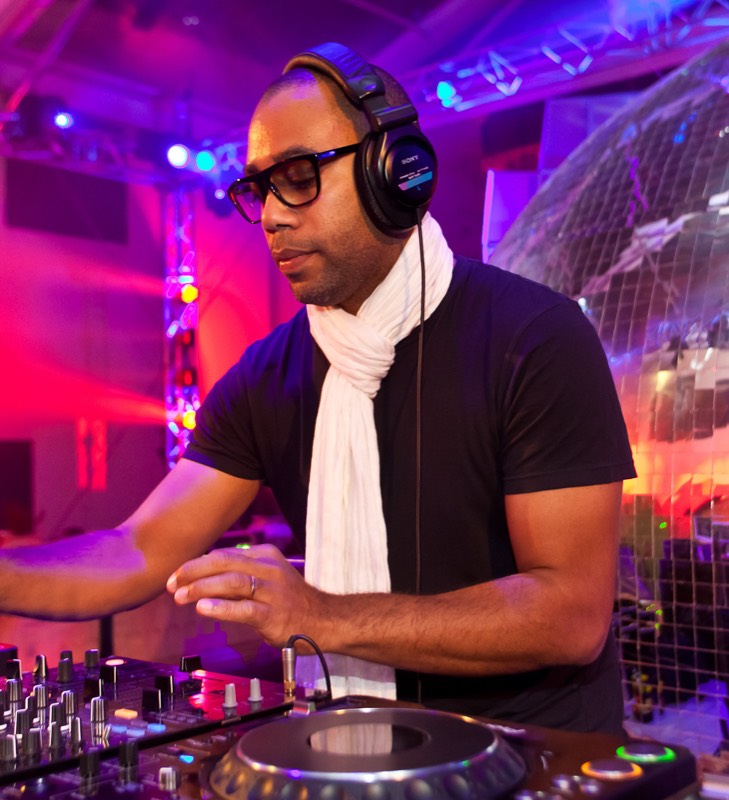
Carl Craig — second-generation Detroit techno. Where the Belleville Three laid the foundation, Craig built cathedrals on top of it.
When Neil Rushton, a Virgin Records scout and former Northern Soul DJ, came to Detroit in 1988, he was looking for house music. What he found was something else entirely. Rushton and the Belleville Three debated what to call it—the working title was “The House Sound of Detroit.” But Atkins had been using the word “techno” since his Cybotron days, and that's what stuck. The compilation “Techno! The New Dance Sound of Detroit” introduced the term to British music journalism and the world. The music was both futuristic and rooted in a specific place and time: the post-industrial Midwest, robotics replacing assembly line workers, Black kids with synthesizers reimagining what technology could mean in hands that weren't supposed to hold it.
Key Players
Juan Atkins was the philosopher-king of Detroit techno, the first to articulate its vision. Born in 1962, his father was a concert promoter—a man who ran shows for Norman Connors, Michael Henderson, Barry White. That gave Juan early access to live music. He played guitar and bass in Detroit funk bands before moving to Belleville, meeting May and Saunderson in junior high. At fifteen, he bought that Korg MS-10 and never looked back.
In 1979, he was making recordings in his house using two cassette decks, a synthesizer, and a four-channel mixer. He lived in a rural area—Belleville—without any musicians to collaborate with. So he made all the drum sounds himself with his MS-10. Eventually he got his first drum machine, a DR-55. The music was a collage of his influences: George Clinton, Funkadelic, Kraftwerk. When Kraftwerk released Computer World in 1980, Atkins heard those sounds—that mechanical precision introduced into an electronic soundscape. “It was not until I heard Kraftwerk that I heard those sounds,” he said.
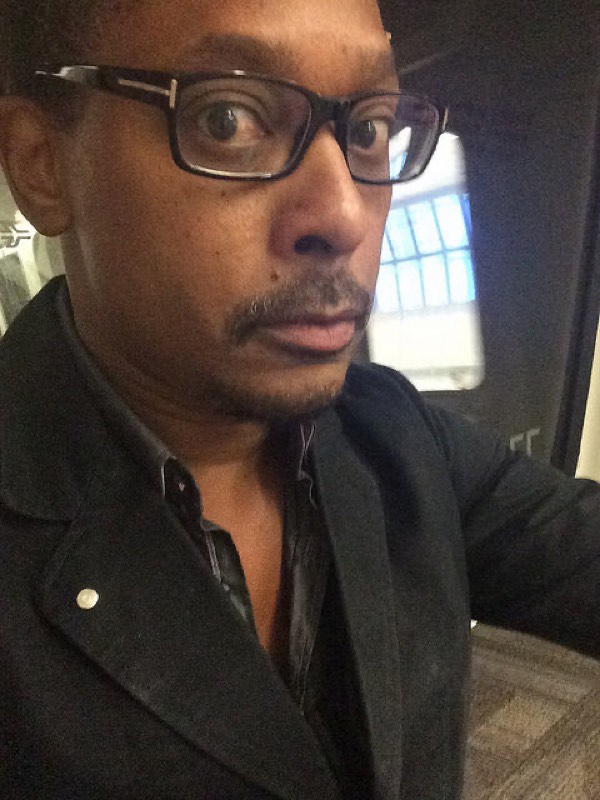
Derrick May, one-third of the Belleville Three. His 'Strings of Life' didn't just define techno — it proved a drum machine could make you cry.
With Richard Davis, he formed Cybotron in 1980. Their 1982 track “Clear” is often cited as the first proto-techno record—a bridge between electro-funk and what would come next. After Cybotron split due to creative differences in 1985, Atkins launched Metroplex and began his Model 500 releases. His aesthetic drew from Alvin Toffler's writings on techno-futurism and dystopian science fiction, but it was Parliament-Funkadelic and Kraftwerk, trapped in that imaginary elevator with only a sequencer, that defined his sonic signature. Mixmag would later call him “the original pioneer of Detroit techno.” John Bush of AllMusic conferred the title “godfather of techno,” stating that Atkins' discography was “perhaps the most influential body of work in the field.”
Derrick May was the romantic, the one who made people feel it in their chests. Born in 1963, his life changed when he moved from Detroit to Belleville as a teenager. There, he developed a deep love of music. He first met Kevin Saunderson when they were fourteen—Saunderson knocked him out cold after May refused to pay up on a lost bet, and they became best friends afterward. The first really funky records that caught him were Cameo, Michael Henderson's “Wide Receiver.” “That stuff right there caught me,” he said. Those were the first records that made him realize something was different about his perception.
Born in 1963, his life changed when he moved from Detroit to Belleville as a teenager.
May absorbed Mojo's radio education and learned to DJ from Atkins. They played high school parties as Deep Space Soundworks. When Atkins left Cybotron and began pursuing a solo career, May regularly travelled to Chicago to promote his records. That led him to visit some of the city's most iconic clubs—the Power Plant, the Music Box. Inspired by his friend, May bought synthesizers and drum machines to make his own music.
When he finally made his own record, he chose the name Rhythim Is Rhythim for “Strings of Life” (1987). That track became anthemic—a synthetic string arrangement so electric it stormed the UK during the 1987-88 house explosion. Frankie Knuckles said it “just exploded” with a kind of power you couldn't imagine until you heard it on a dancefloor. May once described Detroit techno as “a complete mistake... like George Clinton and Kraftwerk caught in an elevator, with only a sequencer to keep them company.” He founded Transmat Records, one of the city's most important techno labels before 1990. Later he took control of the Detroit Electronic Music Festival, renaming it Movement and investing his own funds—an effort that wounded him financially but cemented the festival's legacy. “I got severely wounded financially,” he admitted, but Movement survived.
May once described Detroit techno as "a complete mistake...
Kevin Saunderson was the most technically dexterous of the Belleville Three, the one who could navigate between underground mechanistic techno and slick, vocal-driven house. Born in Brooklyn in 1964, he moved to Belleville at age ten—though not before spending his early years in Flatbush, where as a thirteen-year-old he sneaked into the Loft and the Paradise Garage with his elder brothers. That New York education would later inform his more house-inflected productions.
While Atkins and May were already making records, Saunderson studied telecommunications at Eastern Michigan University and played football. Watching Atkins and May labor over “Let's Go” for six months inspired him to finally start producing. His first release, “Triangle of Love” as Kreem on Metroplex, was raw experimentation—ideas he'd wake up in the middle of the night to record in his home studio.
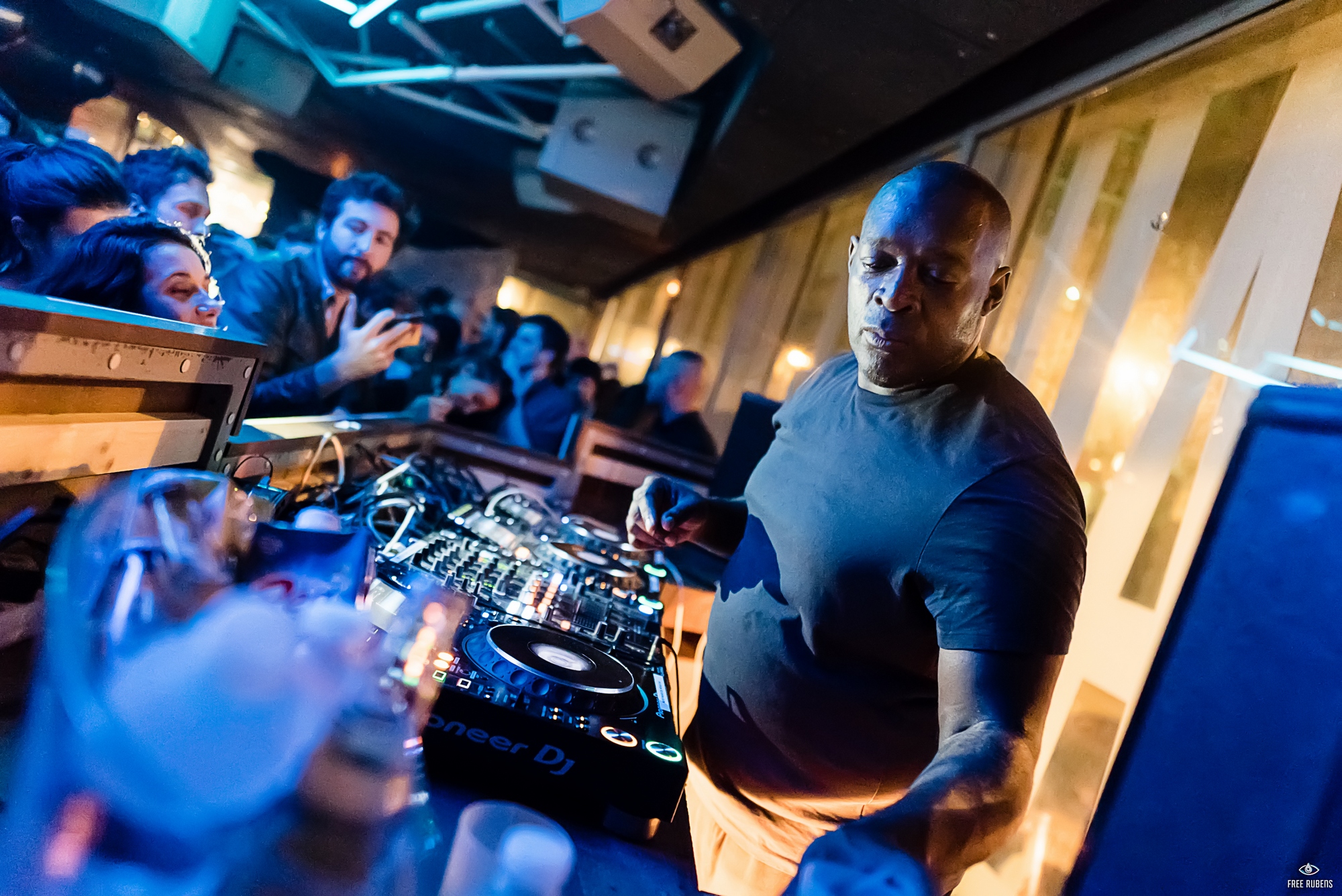
Kevin Saunderson brought techno to the pop charts. Inner City's 'Big Fun' proved underground Detroit could fill stadiums worldwide.
But it was Inner City, formed with vocalist Paris Grey, that made him internationally famous. “Big Fun” and “Good Life” became worldwide smashes; Inner City's three albums sold over six million copies combined. Saunderson also released harder, more underground material as E-Dancer and created the influential “Reese bassline” on his 1988 track “Just Want Another Chance,” which became foundational to jungle and drum and bass. He founded KMS Records to develop new talent. John Bush of AllMusic called him “easily the most dexterous in the stable of Detroit techno pioneers.”
Charles “The Electrifying Mojo” Johnson was the invisible architect, the radio DJ on WGPR whose late-night shows provided sonic education for an entire generation. Mojo played everything without boundaries—funk, new wave, synth-pop, Prince, Parliament, Kraftwerk, European imports. He created a space on the airwaves where the eclectic could thrive. His influence can't be overstated: he taught them that music didn't need to stay in its lane, that Black kids from the suburbs could claim Kraftwerk as readily as Bootsy Collins.
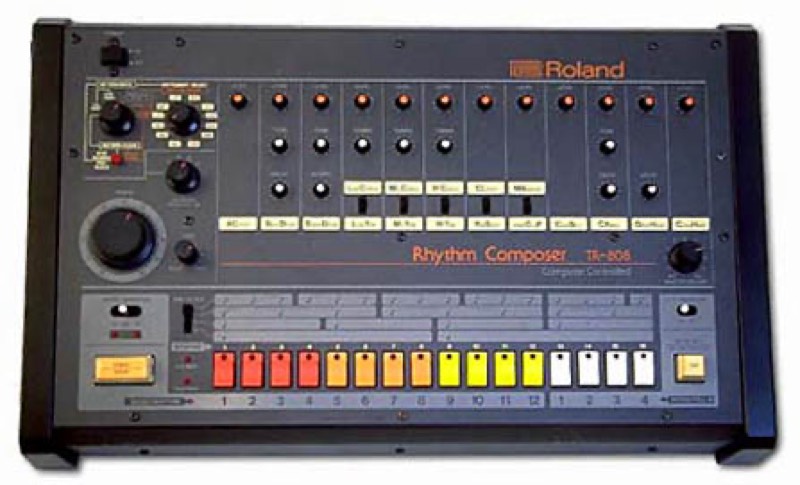
The Roland TR-808. A commercial failure that became the most important instrument in electronic music. Its booming kick drum is the heartbeat of techno, house, and hip-hop.
Eddie “Flashin” Fowlkes, Blake Baxter, Chez Damier, and Alton Miller were part of the first wave, DJing at the Music Institute and helping unite the scattered scene into something cohesive. The second wave—Carl Craig, Underground Resistance (Mike Banks, Jeff Mills, Robert Hood), Jay Denham, and Octave One—pushed the sound into harsher, more industrial territories in the early 1990s, embracing European rave's maximalism while retaining Detroit's mechanistic soul.
Defining the Sound
Detroit techno was machine music with soul. A paradox that shouldn't have worked but did. The foundation was analog synthesizers—Atkins' Korg MS-10, later Roland TB-303s and TR-808 and TR-909 drum machines—running through sequencers that turned rhythm into mathematics. The basslines were deep and resonant, often using phase distortion synthesis on Casio CZ-series keyboards (Saunderson's “Reese bassline” came from a Casio CZ-1000). The drums were hard, snapping with the precision of assembly-line machinery, but arranged with the syncopation and swing inherited from funk.
High-frequency hi-hats skittered across the top, creating momentum. Synthetic strings, pads, and stabs provided melody, but it was a cold, extraterrestrial kind of beauty—nothing organic, everything refracted through circuitry. Atkins described it as “scenery music”—music with a touch of victorious ambition within it. “I was an athlete in high school, in university,” he explained. “And my music has always been about my childhood, the dreamlike happiness that I put in the strings and the melodies. And then there's the sense of trying to get somewhere or be somewhere or fight hard.”
"And my music has always been about my childhood, the dreamlike happiness that I put in the strings and the melodies.
The tracks were built in layers: a kick drum pattern locked to a sequencer, bassline following, then percussion, then those melodies floating above like transmissions from elsewhere. May's “Strings of Life” was the outlier, almost baroque in its lush string arrangements, but even that was synthetic—every note programmed. The sound was futuristic but also dystopian, touching on what one critic called “a deprived sound trying to get out.” It was the sound of a city where robotics had replaced human labor, where the future had arrived and left people behind.
But instead of mourning, Detroit's techno producers claimed technology as their own. As one scholar put it, the process “took technology, and made it a black secret.” Detroit techno distinguished itself from Chicago house by being less vocal, less warm. Where house was built for communal catharsis, Detroit techno was cerebral, introspective. The Belleville Three listened to records in the dark with the lights off, treating the music as serious philosophy rather than mere entertainment. That approach translated into the productions: sparse, spacious, each element given room to breathe. No live instruments, no gospel choirs—just the machines and the minds programming them.
No live instruments, no gospel choirs—just the machines and the minds programming them.
Juan Atkins described it as welding “the more cosmic side of Parliament funk with the rigid computer synth pop embodied by Kraftwerk.” Derrick May's description of Clinton and Kraftwerk trapped in an elevator became the scene's creation myth because it was true: the funk's looseness squeezed through the rigidity of European electronic music, emerging as something entirely new.
By the early 1990s, Atkins had moved into virtual gear and plugins. “I've been getting into a lot of virtual gear, plugins,” he said, describing his live shows which now incorporated Novation keyboards with vocoder capabilities alongside modular synths and Ableton Push. The gear could vary depending on the show. “We like to experiment with new things.”
Kevin Saunderson brought techno to the pop charts. Inner City's 'Big Fun' proved underground Detroit could fill stadiums worldwide.
By the second wave in the early 1990s, the sound grew harsher. Underground Resistance and Richie Hawtin's +8 label pushed speeds faster, incorporated industrial textures, embraced the brutalism of European rave music. Tracks like UR's “Predator” and “Riot” presented abstract militancy, a kind of sonic warfare against “the programmers”—their term for the commercial mainstream entertainment industry. The minimalist progressive techno that emerged from +8 was lean and fierce, stripping away ornament until only the essential remained. Yet even at its most abrasive, Detroit techno retained melodic sensibility. These weren't just functional dancefloor tools; they were compositions, recordings you could sit and listen to in the dark, the way the Belleville Three had done as teenagers.
Stories
When Kevin Saunderson knocked Derrick May unconscious at Belleville High School, neither could have known they'd end up making history together. May had welched on a bet, and Saunderson—not one to let things slide—punched him in the face, giving him a concussion. Instead of becoming enemies, they became inseparable. That kind of bond, forged in adolescent violence and sealed by mutual respect, characterized the Detroit techno scene's early days. These weren't distant collaborators; they were friends who'd grown up together, shared turntables in basements, argued about records.
The creation of Inner City happened by accident, which made it no less significant. In 1987, Saunderson recorded a backing track in his home studio but needed lyrics and a vocalist. Terry 'Housemaster' Baldwin, a Chicago house producer, suggested Paris Grey. She flew to Detroit, wrote lyrics on the spot, and “Big Fun” was born. Saunderson filed the tape away and forgot about it. Months later, when Neil Rushton came searching for tracks for the Virgin compilation, Saunderson pulled out “Big Fun” almost as an afterthought. It became a worldwide smash, followed by “Good Life,” which sold even better. Three albums and nine UK top 40 hits later, Inner City had sold over six million records. The lesson: sometimes the revolution arrives when you're not looking for it, on a track you'd nearly forgotten in a drawer.
The Roland TR-808. A commercial failure that became the most important instrument in electronic music. Its booming kick drum is the heartbeat of techno, house, and hip-hop.
The Music Institute's demise was as sudden as its rise. For less than two years starting in 1988, 1315 Broadway in downtown Detroit was the center of everything—the place where the scattered Detroit techno community became a family. Chez Damier, Alton Miller, and George Baker had created something special, a downtown club where the Belleville Three, Eddie Fowlkes, and Blake Baxter all DJed. But the club couldn't sustain itself financially. When it closed, the scene fractured again, pushing producers back into their home studios and onto the European touring circuit where the real money and appreciation lived.
Derrick May's investment in the Detroit Electronic Music Festival nearly bankrupted him. In 2004, he took control of the festival and renamed it Movement, pouring his own funds into making it work. “I got severely wounded financially,” May admitted. The strain was severe. But Movement survived and became one of the most important techno festivals in the world, an annual pilgrimage site for electronic music fans. May's sacrifice kept Detroit's story alive, ensured that the city where it all started remained central to the narrative. In 2007, Kevin Saunderson returned to perform at Movement—a homecoming for one of the founding fathers.
Months later, when Neil Rushton came searching for tracks for the Virgin compilation, Saunderson pulled out "Big Fun" almost as an afterthought.
When Juan Atkins formed Cybotron with Rick Davis in 1980, they had no idea “Clear” would be cited decades later as the first proto-techno track. They were just two guys in Detroit making electronic music that fused the sounds they loved: Parliament's cosmic funk, Kraftwerk's robotic precision, the synthesizer as instrument and message. “Alleys of Your Mind” sold 15,000 copies in 1981—a stunning number for an independent release. When Mojo played it on his radio show, nobody knew this was some Black kids from Detroit making this record. They thought it was from Europe. Two follow-up singles, “Cosmic Cars” and “Clear,” caught the attention of California's Fantasy Records, which signed them and released their album “Enter” in 1983. But creative differences fractured the partnership. Atkins went solo, launched Metroplex, and as Model 500, defined what Detroit techno would become. Davis faded from the story, but his contribution was foundational. Without Cybotron, there might not have been a Model 500.
Legacy and Influence
Detroit techno's blueprint spread across the Atlantic faster than it took root in America. The UK's 1987-88 acid house explosion embraced Derrick May's “Strings of Life” as an anthem, and British and European producers transformed Detroit's elegantly futuristic sound into something more maximal, more drug-fueled, more unabashedly euphoric. Detroit's second wave responded by creating their own version of acid house and rave culture, but with harder edges—the industrial bleakness of Underground Resistance, the minimalist ferocity of +8.
This transatlantic exchange shaped the entire trajectory of electronic dance music in the 1990s. Jungle and drum and bass owe a direct debt to Kevin Saunderson's “Reese bassline,” which became a foundational sound in tracks like Renegade's “Terrorist” and Alex Reece's “Pulp Fiction.” Berlin's techno scene, which would dominate the 2000s, was built on Detroit's foundation—Juan Atkins even collaborated with Moritz von Oswald on the Borderland project, closing a circle that had begun with Kraftwerk's influence on Detroit decades earlier.
Juan Atkins' statement that "I hate that things have to be separated and dissected [by race]...
Once, WestBam—Germany's iconic techno DJ—was sitting in his apartment at Berlin Alexanderplatz when Juan Atkins' name came up. “Without him, we all would be nothing,” WestBam said. He'd never met Atkins. When they finally connected, WestBam treated Juan with extreme respect—the kind of reverence reserved for architects of entire movements.
The political dimension of Detroit techno—its Afrofuturist vision of technology as liberation rather than oppression, its insistence that electronic music could be multiracial and universal—resonated far beyond the dancefloor. Underground Resistance's militant stance against “the programmers” influenced activist strains in electronic music worldwide. The idea that music could exist “free from the limitations, prejudice, and preconceptions that the Detroit urban environment manifested,” as one scholar put it, was radical in 1985 and remains radical now.
A new album, "12," is on the way, alongside a new single "Idle" on Metroplex Records.
Juan Atkins' statement that “I hate that things have to be separated and dissected [by race]... to me it shouldn't be white or black music, it should be just music” challenged both the music industry's segregationist tendencies and essentialist notions of Black authenticity. Detroit techno proved that Black artists could claim any sound, any technology, any vision of the future they wanted.
Today, Detroit techno's influence is everywhere electronic music exists. The minimal techno movement, the resurgence of hardware synthesizers and analog production techniques, the festival culture that treats techno as art rather than mere entertainment—all trace back to those basement studios in Belleville and the Music Institute's brief flowering. The annual Movement festival draws tens of thousands to Detroit, a pilgrimage to the source.
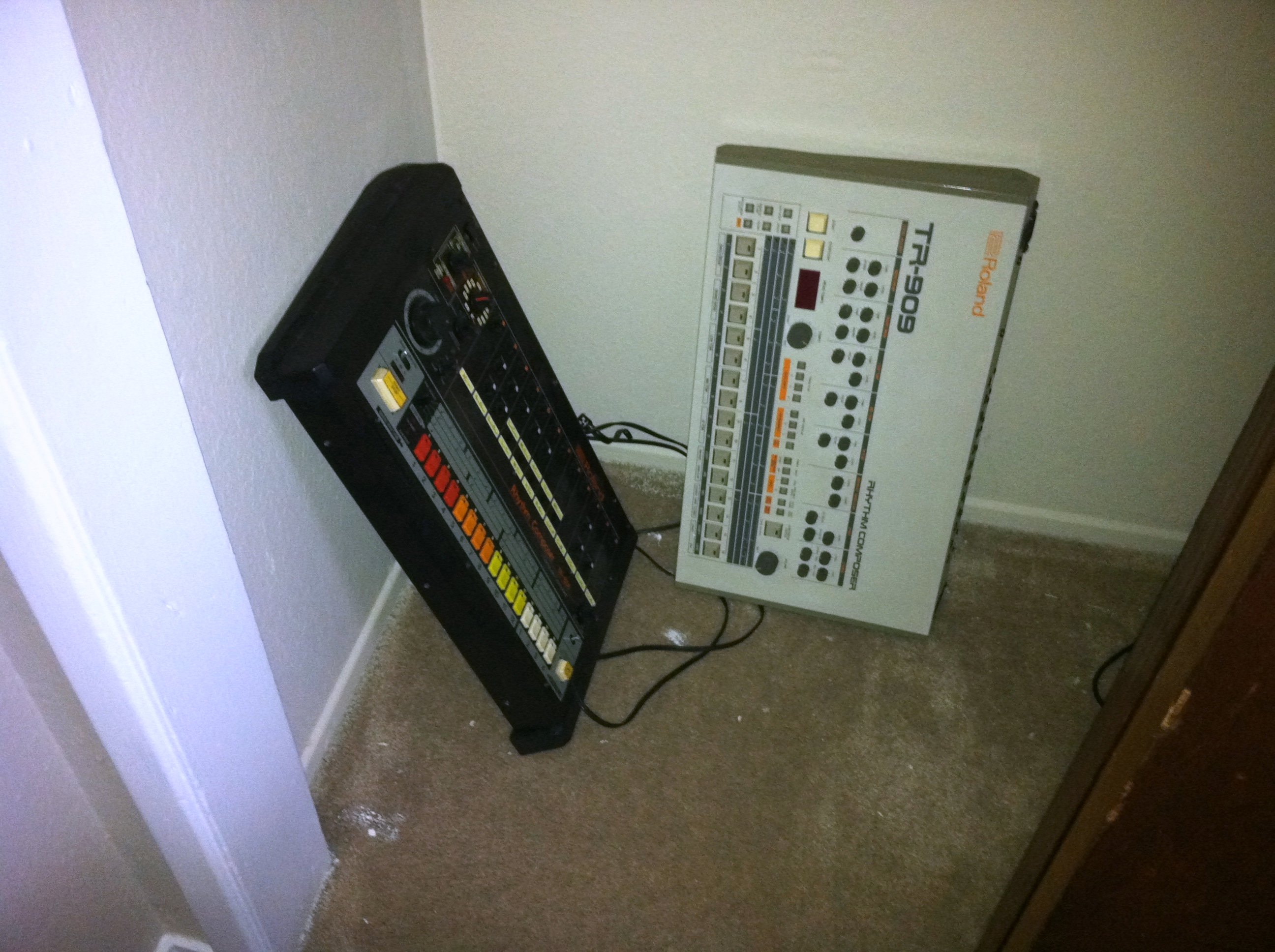
808 and 909, side by side. The 808's analog warmth and the 909's sharper attack — between these two machines, every beat in electronic music was written.
And the Belleville Three remain active. Atkins continues releasing music as Model 500 and recently relaunched Cybotron with the blessing of cofounder Rik Davis. A new album, “12,” is on the way, alongside a new single “Idle” on Metroplex Records. He's also presenting “Respect The Sound” masterclasses at Berklee, MIT, and other music schools worldwide—lectures focusing on sound theory, how sound waves and frequencies affect the body and mind, how everything in the universe is connected through vibrations.
Saunderson runs KMS Records and nurtures new talent. May—despite his financial wounds—still DJs and produces. He's collaborated with orchestras, working with director Dzijan Emin and the City of London Sinfonia to bring techno's energy to life with classical arrangements. “Everything I make, every song I created, I always felt an orchestra in it,” May explained. “I make what I like to call 'scenery music.' It's scenery music with a touch of victorious ambition within it.”
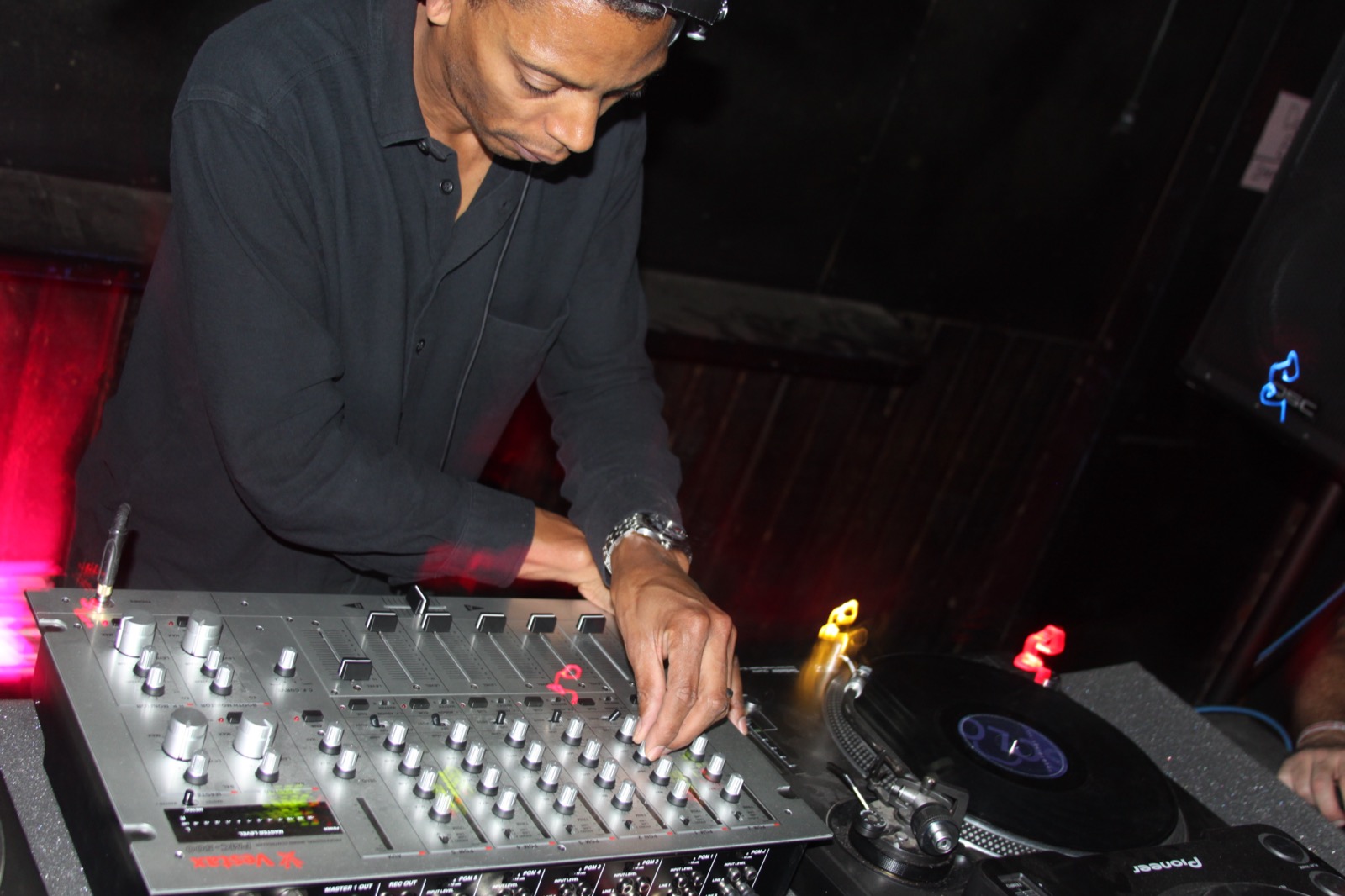
Jeff Mills at the Vestax. Three turntables, relentless BPM, no tracklist. Mills turned DJing into a performance art — the Wizard of Detroit radio became a legend.
They created something that outlived the moment, the city's industrial decline, even their own youth. They made machine music human, and in doing so, changed what music could be.
Chicago house provided the club culture template that inspired Detroit's Music Institute, while Detroit techno distinguished itself through more futuristic, less vocal-driven productions.
UK Acid House
Britain's 1987-88 acid house explosion embraced Detroit techno tracks like "Strings of Life" as anthems, creating a transatlantic exchange that shaped 1990s electronic dance music.
Berlin's techno scene was built on Detroit's foundation, with artists like Juan Atkins collaborating with German producers and Detroit's aesthetic becoming central to Berlin's club culture.
Jungle/Drum and Bass
Kevin Saunderson's "Reese bassline" from 1988 became foundational to jungle and drum and bass production, directly linking Detroit techno to UK bass music evolution.
Electro-Funk
Detroit techno emerged directly from electro-funk, with Cybotron's early releases bridging the gap between Afrika Bambaataa's Bronx sound and techno's futuristic minimalism.
Minimal Techno
Detroit's second wave, particularly Robert Hood and Jeff Mills, pioneered minimal techno's stripped-down aesthetic, influencing the genre's 1990s reduction toward functional, loop-based productions.