Tokyo
Tokyo appears in 2 Songsheets issues: Japanese City Pop and Japanoise: The Extreme Edge of Sound. 11 artists in the archive came from here, including Tatsuro Yamashita, Mariya Takeuchi and Haruomi Hosono. Key places include Sound City Studios, Roppongi Pit Inn and Alfa Records Studio. The issues date 6 events here, from 1975 to 1984.
The epicenter of city pop. Tokyo's bubble-era studios produced some of the most sophisticated pop music ever recorded, blending jazz fusion, R&B, and AOR.
Scenes
Artists from Tokyo
- Tatsuro Yamashita
Tatsuro Yamashita built his reputation on obsession: entire songs recorded alone, stacking his own vocals, harmonies, guitar, synthesizer and percussion track by track until the mix matched the sound in his head.
- Mariya Takeuchi
Mariya Takeuchi's sophisticated pop, and her songwriting for idol singers, shaped Japanese music through the 1980s in ways the charts didn't always capture.
- Haruomi Hosono
Haruomi Hosono helped legitimize Japanese-language rock as a member of Happy End, then spent the following decades restlessly reinventing himself: exotica, electronic fusion, ambient, film scoring, and, with Yellow Magic Orchestra, some of the most consequential synthesizer pop to come out of Japan.
- Casiopea
Casiopea took city pop's production values—melodic clarity, technical precision, a horror of sloppiness—and applied them to instrumental jazz fusion, building a body of work that would go on to shape Japanese video game music through the 1980s and 1990s.
- Merzbow
Masami Akita picked up drums around 1972, playing in a blues-rock band schooled on Cream and Jimi Hendrix.
- Hijokaidan
Formed in Tokyo in 1979, Hijokaidan built a reputation on confrontational live performances that followed no script: walls of feedback, metal percussion, and screaming electronics assembled in the moment rather than planned in advance.
- C.C.C.C.
Cosmic Coincidence Control Center formed in Tokyo in 1990, taking its name from John C.
- Group Ongaku
Formed in Tokyo in 1960 by Takehisa Kosugi and Yasunao Tone, Group Ongaku made what stand as the first Japanese noise recordings, treating vacuum cleaners, oil drums, radios, dolls, dishes, and manipulated tape as instruments in their own right.
- Taeko Onuki
Taeko Onuki co-founded Sugar Babe, then went her own way after the band dissolved in 1975, building a jazz-inflected solo career defined by harmonic sophistication and lyrics that turned inward rather than outward.
- Yellow Magic Orchestra
Yellow Magic Orchestra formed in Tokyo in 1978 when Hosono, fresh off collaborating with Ryuichi Sakamoto and Yukihiro Takahashi on his album Paraiso (1977), went looking for musicians who could handle the synthesizers—Yamaha CS-80, ARP Odyssey—driving his exotica experiments.
- Minako Yoshida
Minako Yoshida's jazz- and R&B-inflected songwriting helped define the "urban pop" sound that would later be folded into city pop's broader identity.
Places
- Sound City Studios1974-present · Japanese City Pop
Premier recording facility where Tatsuro Yamashita and many city pop artists recorded throughout the late 1970s and 1980s, known for its state-of-the-art equipment imported from the United States.
- Roppongi Pit Inn1965-present · Japanese City Pop
Jazz club where many city pop musicians performed live and developed their sound, serving as a bridge between Japan's jazz fusion scene and emerging city pop movement.
- Alfa Records Studio1977-1994 · Japanese City Pop
The in-house studio for Alfa Records, one of city pop's most important labels, where artists like Taeko Ohnuki and Minako Yoshida recorded many definitive albums.
- RCA Studios Tokyo1975-1990 · Japanese City Pop
Recording home for both Tatsuro Yamashita and Mariya Takeuchi during their RCA years, where many of city pop's most iconic albums were produced with cutting-edge technology.
- Shibuya HMV1990-present · Japanese City Pop
Major record shop that became a gathering place for city pop fans and helped popularize the genre through careful curation and in-store promotional events.
- Blue Note Tokyo1988-present · Japanese City Pop
Opened in 1988, this venue hosted performances by city pop artists and international jazz and funk acts who influenced the genre, cementing Tokyo's cosmopolitan music culture.
- Epicurus1978-1990 · Japanese City Pop
Roppongi disco and live music venue where city pop artists performed and the sophisticated urban lifestyle the genre represented was lived out on the dance floor.
What happened here
- 1975Sugar Babe releases Songs
Yamashita, Onuki, and Muramatsu's only album becomes city pop blueprint despite poor sales and immediate breakup
Japanese City Pop - 1977Term 'city pop' emerges
Record companies begin using 'city pops' to market urban, sophisticated music by artists like Yoshida, Yamashita, and Kisugi
Japanese City Pop - 1980Ride on Time tops charts
Yamashita's album and title track reach commercial peak, coinciding with Japan's bubble economy and becoming synonymous with Walkman-era optimism
Japanese City Pop - 1982Yamashita and Takeuchi marry
Two of city pop's most important figures unite personally and professionally; Takeuchi begins hiatus focused on songwriting for others
Japanese City Pop - 1983"Christmas Eve" released
Yamashita's perennial holiday anthem becomes Japan's best-selling single of the 1980s, charting every December for over three decades
Japanese City Pop - 1984"Plastic Love" released
Takeuchi's song charts modestly but becomes city pop's most famous international export after 2017 YouTube rediscovery
Japanese City Pop
Records made by artists from Tokyo
- Automatism / ObjectGroup Ongaku · 1960
- Hosono HouseHaruomi Hosono · 1973
- Circus TownTatsuro Yamashita · 1976
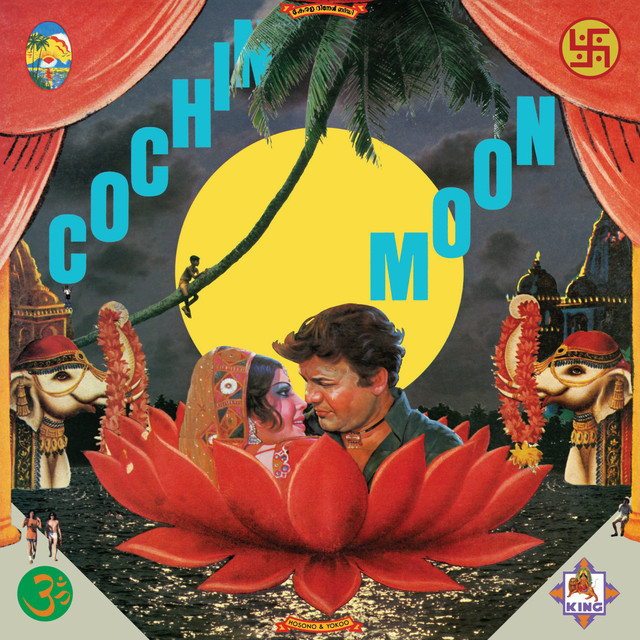
- Cochin MoonHaruomi Hosono · 1978
- Love SongsMariya Takeuchi · 1980
- Ride on TimeTatsuro Yamashita · 1980
- Collection series (10 cassettes)Merzbow · 1981
- MelodiesTatsuro Yamashita · 1983
- VarietyMariya Takeuchi · 1984
- Pornoise/1kgMerzbow · 1984
- ImpressionsMariya Takeuchi · 1994
- Pulse DemonMerzbow · 1996
- MerzboxMerzbow · 2000
- MerzbeatMerzbow · 2002