Bratmobile
Bratmobile started as a joke, or close to one, hatched in theory in the bathroom of a University of Oregon dorm in fall 1989 by Allison Wolfe and Molly Neuman. They moved to Washington, D.C. in spring 1991 and became a real band with Erin Smith, Christina Billotte, and Jen Smith. Neuman's zine gave the whole movement its name. Erin Smith later described the scene's real currency as pen pals: mailing a zine to a stranger and hoping somebody out there would understand it, then hearing back, then calling on the phone. The band released Pottymouth in 1993 before breaking up onstage at Thread Waxing Space in New York City in May 1994. "Mostly my fault," Wolfe admits. They reformed in 2000, Wolfe telling Static magazine that a band doesn't get put out to pasture just because society says so.
At a glance
- Active
- 1991–1994, 2000–2003
- From
- Eugene, Oregon / Washington, D.C., USA
- Records in the issues
- 1 (1993)
- Original label
- Kill Rock Stars
- Listening guide track
- “Cool Schmool”
Listen
In the Riot Grrrl listening guide: “Cool Schmool”
In the issues
- Riot GrrrlPrincipal · 1988-1996
Riot Grrrl is a music scene from Olympia, Washington & Washington, D.C., USA, 1988–1996. Its principal artists include Bikini Kill, Bratmobile and Sleater-Kinney. This issue covers 10 essential albums and 15 dated events.
Records
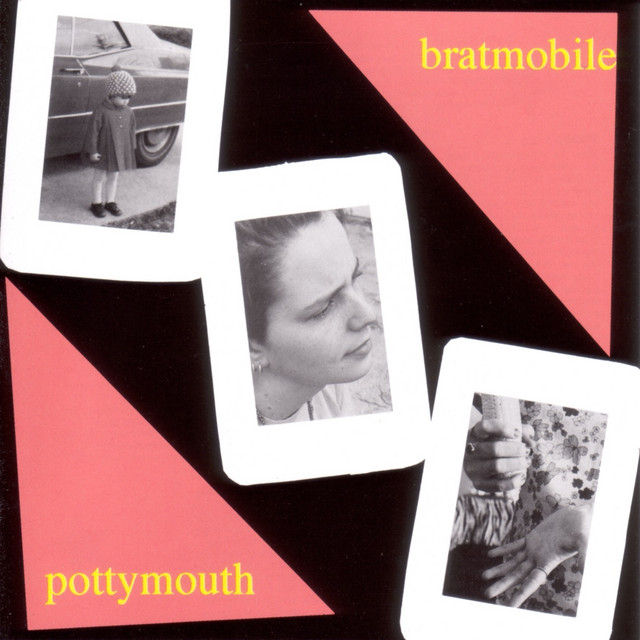
Pottymouth
1993 · Go deeper in Riot GrrrlOriginal release: Kill Rock Stars · KRS 208 · CD · US 1993Bratmobile's scrappy 1993 debut caught the DIY spirit of the scene and stands as the second most important riot grrrl statement after Bikini Kill's records. Molly Neuman's direct drumming, Erin Smith's urgent guitar, and Allison Wolfe's breathless vocals, at times nearly swallowed by the instrumentation, made for a record that was functional, driving, and stripped down to what mattered.
Listen on Spotify
Voices
Quotations from the issues, each matched word for word against the source it links to.
“For me, the importance of riot grrrl was to make feminism more punk, and to make punk more feminist. But I feel like it sort of had to do with an era, with the early '90's.”
Terms
- Zine
- A self-published, small-circulation booklet or magazine, often photocopied and distributed by hand or mail, historically used by punk, riot grrrl, and other subcultures to share music criticism, art, and political ideas outside mainstream media.