The Scene
The ground moved before anyone named it. 1982: the first K Records release was a cassette by Supreme Cool Beings, featuring Heather Lewis while she was still a student at The Evergreen State College—a year before she co-founded Beat Happening. Same decade, Olympia women like Stella Marrs, Dana Squires, and Julie Fay opened Girl City, a store where they created art and performances that seeded a feminist artistic legacy. The Go Team formed in 1985 with fifteen-year-old Tobi Vail on drums. Across the country in Portland, Puncture zine published Terri Sutton's essays on women in rock. Her 1989 piece “Women, Sex, & Rock 'n' Roll” became what some consider the proto-manifesto of riot grrrl, written before the term existed.
By the late eighties, Olympia had built a sophisticated DIY infrastructure: K Records, KAOS community radio, The Evergreen State College. Cheap rent. Collective ethos. Women articulated feminist beliefs through zines and music in ways that felt impossible elsewhere. In Washington, D.C., Erin Smith started her zine Teenage Gang Debs in 1987. Beat Happening toured and inspired a network of women who felt shut out of male-dominated punk scenes in both cities. The discomfort was physical. As Tobi Vail wrote in her zine Jigsaw: “I feel completely left out of the realm of everything that is so important to me. And I know that this is partly because punk rock is for and by boys mostly.”
In Washington, D.C., Erin Smith started her zine Teenage Gang Debs in 1987.
Summer 1991. Women from Olympia and D.C. held a meeting about sexism in their local punk scenes. Jen Smith wrote to Allison Wolfe: “We need to start a girl RIOT!” When Molly Neuman began a zine based on this idea, she titled it riot grrrl, giving the movement its name. The word “girl” was intentional—focusing on childhood, when self-esteem runs highest. The growling triple-R replaced the “I,” reclaiming a derogatory term. That August, the International Pop Underground Convention in Olympia featured “Love Rock Revolution Girl Style Now!”—an all-female bill organized by Lois Maffeo, KAOS DJ Michelle Noel, and Margaret Doherty. Zinester punks who'd only known each other through mail finally met face-to-face. Jean Smith of Mecca Normal performed. Bratmobile, Heavens to Betsy, 7 Year Bitch played. An entire night of music dedicated to, for, and by women. It felt like proof of concept.
Riot grrrl was never just music. It combined feminism, punk, and politics into a subcultural movement defined by its DIY ethic, zines, art, political action, activism. The movement addressed rape, domestic abuse, sexuality, racism, patriarchy, classism, anarchism through raw songs and hand-xeroxed manifestos. By 1992, the first Riot Grrrl Convention in D.C. brought together grrrls for performances and workshops on rape, self-defense, soundboard operation. Bikini Kill made fliers explaining: “Because in every form of media we see ourselves slapped, decapitated, laughed at, objectified, raped, trivialized, pushed, ignored, stereotyped, kicked, scorned, molested, silenced, invalidated, knifed, shot, choked and killed.” The stakes were survival. The weapon was noise. The space was carved out with force.
Key Players
Kathleen Hanna became riot grrrl's most visible figure, though she never sought the role. A performance artist and feminist who'd worked at SafePlace, a domestic violence organization in Olympia, she started Bikini Kill with Tobi Vail, Kathi Wilcox, and Billy Karren in October 1990. Hanna's confrontational stage presence—diving into crowds to physically remove male hecklers, writing “SLUT” on her stomach in lipstick—fused feminist art with activist punk. She'd ask women to come to the front at shows, handing out lyric sheets. Creating a space where anger wasn't just permitted but required. As she told KQED, the band “urged women and girls in the audience to move up to the front of the stage, write political zines and talk openly about sexual violence.” Emboldened by the music, fans would come to Hanna to talk about their own experiences. After Bikini Kill dissolved in 1997, Hanna recorded a bedroom solo album as Julie Ruin, then formed Le Tigre, bringing riot grrrl's politics into electronic music. Her work has always been about making the personal political, from her early zines to her years-long, undiagnosed battle with Lyme disease that forced her offstage. Since diagnosis and treatment, she's back performing. As she told KQED in 2024: “The songs really go from joy to sadness to rage very quickly. And I'm finding nuances in them that I didn't know were there.”
Tobi Vail was the intellectual engine. Drummer, zinester, theorist—her fanzine Jigsaw articulated the frustrations that would become riot grrrl's founding principles. She met Hanna after Hanna booked the Go Team at Reko Muse gallery, and their collaboration produced Bikini Kill's self-released cassette Revolution Girl Style Now in summer 1991. Vail's critique of “mindless career-goal bands” and the boys-only nature of punk gave the movement its analytical edge. As she explained in a 1999 oral history: “I feel like Bikini Kill and Bratmobile and our friends sort of had this idea that was called 'Revolution Girl Style Now!' And that was sort of like our idea of like, let's just, you know, 'Let's get all these girls to learn how to play instruments and take care of her and change everything.'” She later played in the Frumpies, Spider and the Webs, and remained a rotating collaborator in Olympia's interconnected scene. Kathi Wilcox, Bikini Kill's bassist, provided the low-end anchor and stayed active post-breakup with the Casual Dots and later The Julie Ruin, proving riot grrrl's longevity extended beyond its initial flash.
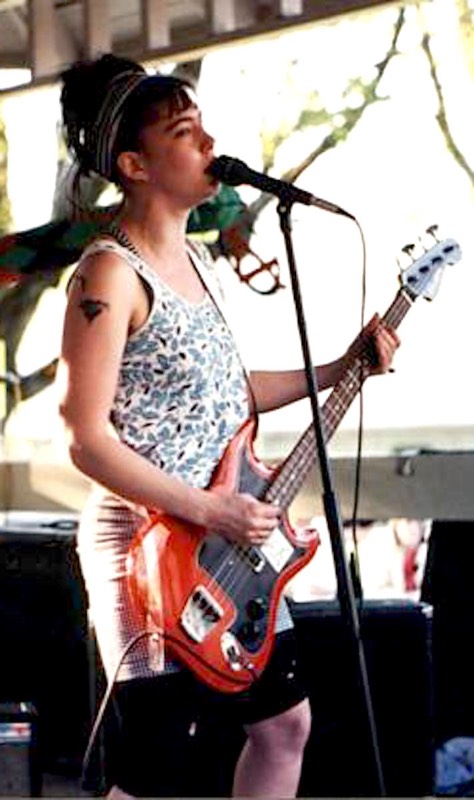
Allison Wolfe and Molly Neuman of Bratmobile gave the movement its name and its D.C. axis. University of Oregon students who collaborated on the zine Girl Germs, they started the band “in theory” in the bathroom of the UofO international dorm in fall 1989, as Neuman told chickfactor. They relocated to D.C. in spring 1991 and formed Bratmobile with Erin Smith, Christina Billotte, and Jen Smith. When Neuman changed the zine's title from Girl Riot to riot grrrl, it became a networking forum that spread far beyond music. Bratmobile's scrappy, unpolished sound—Neuman on drums, Erin Smith on guitar, Wolfe's raw vocals—embodied the DIY ethos. As Wolfe explained to Static magazine in 2024: “It was important for us to show that women at our age, as they're aging... that we can just keep doing stuff. You don't get put out to pasture just because society says so.” Their 1993 album Pottymouth and tours with Heavens to Betsy cemented them as riot grrrl's second-most prominent voice. After breaking up in 1994, they reformed in 2000, with Wolfe later fronting Cold Cold Hearts and Partyline.
Corin Tucker and Carrie Brownstein carried riot grrrl forward into critical acclaim. Tucker's Heavens to Betsy and Brownstein's Excuse 17 were first-generation riot grrrl bands; when both dissolved, they formed Sleater-Kinney in 1994. With drummer Janet Weiss joining in 1997, Sleater-Kinney became the scene's most enduring act, releasing seven albums by 2005 before an eight-year hiatus. Tucker's piercing, intentionally harsh vocals—designed to demand focus—and the band's dual-guitar attack created a sound that transcended riot grrrl's lo-fi origins. Critics like Greil Marcus called them America's best rock band in 2001. They reformed in 2014 and have released four albums since, proving riot grrrl's DNA could mutate into something both commercially viable and artistically uncompromising.
Defining the Sound
The aesthetic rejected technical virtuosity in favor of raw expression. A rebellion against punk rock's growing professionalization in the late eighties. Bikini Kill recorded their first demos on a four-track in summer 1991, titling the cassette Revolution Girl Style Now. The production was lo-fi by necessity and choice: tinny drums, guitars that buzzed and snarled, vocals mixed hot and confrontational. This wasn't the polished punk of major labels. Bedroom punk, made by women who'd been told they couldn't play. The point was to prove you didn't need permission or proficiency—you needed something to say.
As Kathi Wilcox told interviewer Jessica Jordan-Wrench: “We didn't value virtuosity, that wasn't what we were interested in. I didn't know how to play guitar. We definitely weren't like we have to practice for a year before we play a show.” When playing live they actively highlighted the limitations of their musicianship, switching roles and instruments mid-set, or even mid-song, to those they felt less comfortable with. Tobi Vail explained: “This was partially done to show girls in the audience what it's like to see a band perform a song on instruments they don't actually know how to play. Learning how to play our instruments in front of a live audience was done to encourage young women to start their own bands.”
As Kathi Wilcox told interviewer Jessica Jordan-Wrench: "We didn't value virtuosity, that wasn't what we were interested in.
The guitar work featured open, dissonant chords and simple but urgent riffs. Billy Karren's guitar on Bikini Kill tracks like “Rebel Girl” alternated between jangly, melodic passages and raw, distorted power chords. Sleater-Kinney took this further, pioneering a dual-guitar interplay between Tucker and Brownstein that eliminated the need for bass on early recordings. Their guitars wove around each other, creating rhythmic and melodic tension—one jagged and stabbing, the other circling with sustained notes. Nervous, angular sound, influenced by Wire and X-Ray Spex as much as hardcore punk.
Vocally, riot grrrl was confrontational. Kathleen Hanna's delivery ranged from sneering spoken-word to full-throated screams, often punctuated by sharp intakes of breath that sounded like controlled panic. Corin Tucker's voice, described by some as polarizing, was intentionally harsh: a high, keening wail designed to make listeners uncomfortable, to demand attention rather than approval. Allison Wolfe's vocals on Bratmobile tracks were less technically controlled but equally effective—breathless, urgent, sometimes nearly overwhelmed by the instrumentation. The vocals weren't pretty. They were necessary.
Kathleen Hanna's delivery ranged from sneering spoken-word to full-throated screams, often punctuated by sharp intakes of breath that sounded like controlled panic.
The rhythm section was functional, driving, stripped of flash. Tobi Vail's drumming on Bikini Kill tracks emphasized the backbeat, simple but propulsive, never overplaying. Molly Neuman's approach was similarly direct. The bass, when present, provided solid low-end without flourish—Kathi Wilcox's lines on Pussy Whipped locked in with the drums, creating space for the guitars and vocals to rage. Music made in basements and living rooms, recorded quickly on limited budgets, often at John and Stu's Place in Seattle or in bedrooms with cheap equipment. The aesthetic was Xeroxed: copy-of-a-copy fidelity that wore its limitations as a badge of honor.
Stories
The International Pop Underground Convention in August 1991 became riot grrrl's coming-out party, though the movement was still unnamed. K Records organized the five-day festival, and the first night—“Love Rock Revolution Girl Style Now!” or simply “Girl Night”—was organized by Lois Maffeo, KAOS DJ Michelle Noel, and Margaret Doherty. The lineup was almost entirely female: Bratmobile, Heavens to Betsy, 7 Year Bitch, Kathleen Hanna's side projects Suture and the Wondertwins. The promotional poster read: “As the corporate ogre expands its creeping influence on the minds of industrialized youth, the time has come for the International Rockers of the World to convene in celebration of our grand independence.” Zinester punks who'd only corresponded by mail finally met face-to-face. Jean Smith of Mecca Normal, a foundational influence on riot grrrl's feminist punk ethos, performed. So many women in one room, on one stage, for one night—it felt like proof of concept.
Bikini Kill's UK tour with Huggy Bear in 1993 nearly combusted from internal and external pressure. The band had become increasingly wary of media attention, fearing co-optation by corporate interests. When they appeared on the British TV show The Word to perform with Huggy Bear, the backlash was immediate—mainstream press either mocked them or tried to reduce riot grrrl to a fashion trend. Liz Naylor, Huggy Bear's manager and founder of Catcall Records, had met Kathi Wilcox by chance while traveling in Europe in 1991; their subsequent correspondence brought the scenes together. Filmmaker Lucy Thane followed the tour with borrowed equipment, capturing raw footage that became It Changed My Life: Bikini Kill in the U.K. The documentary shows the band exhausted, exhilarated, increasingly suspicious of anyone with a camera. Kathleen Hanna stage-dived into crowds to remove hecklers. Male audience members verbally and physically assaulted her during shows. As Tobi Vail recalled in a 1999 oral history: “Every show we played was like a war. Because guys were trying to beat us up and stuff, you know? It was really violent. We had a lot of fans and we didn't have any crowd control, we didn't have a manager, you know? We'd just play these crazy places, like bowling alleys and they'd cram like 600 people in there and stuff. No security.” The tension between wanting to spread the word and protecting the movement from exploitation was tearing the scene apart.
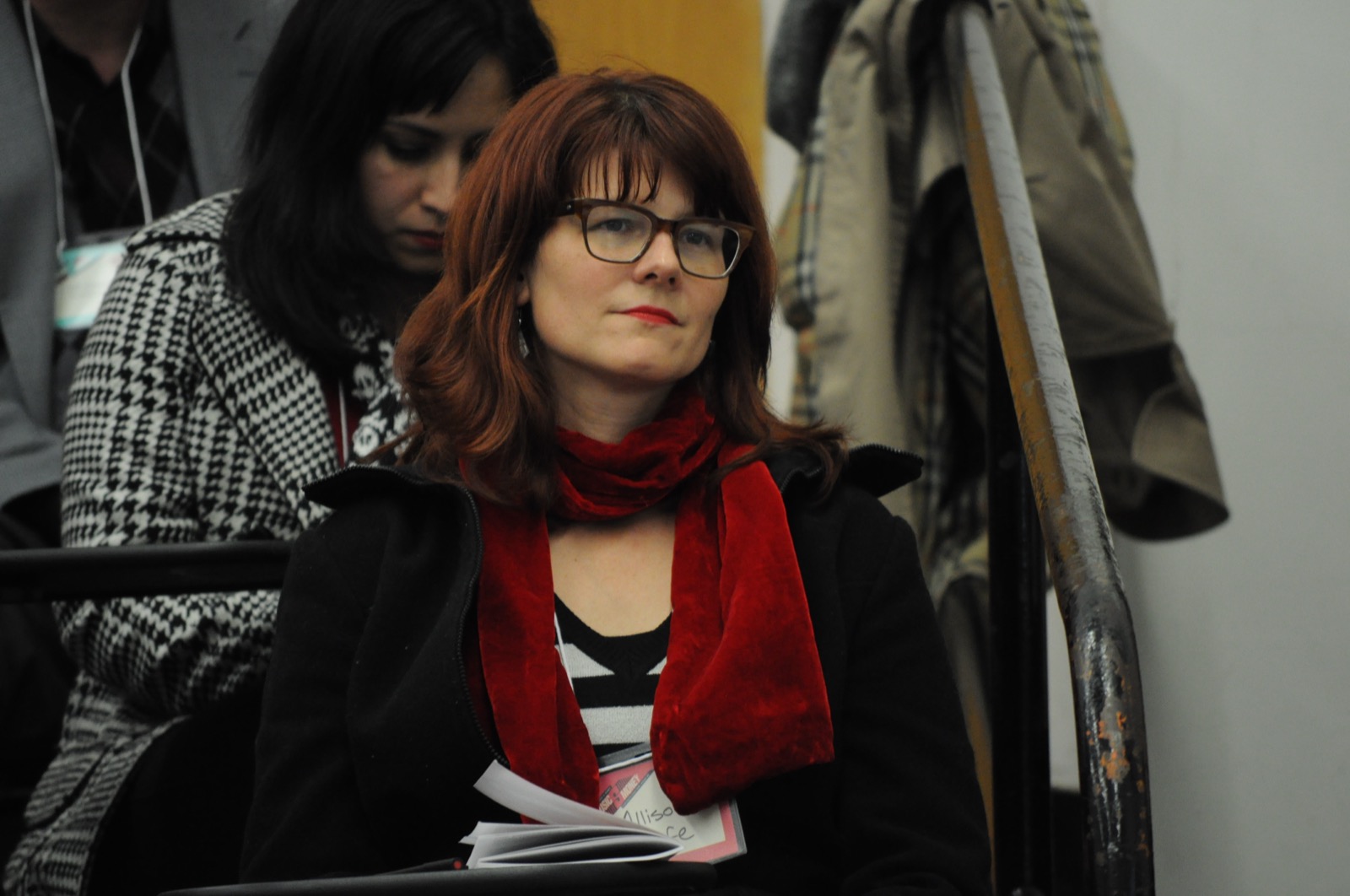
The media misconceptions reached a fever pitch in 1992 when Newsweek ran a headline calling riot grrrl “feminism with a loud happy face dotting the 'i'” and USA Today proclaimed “From hundreds of once pink, frilly bedrooms comes the young feminist revolution.” The articles trivialized the movement, reducing radical politics to a trend. Riot grrrls responded with a media blackout. Jessica Hopper, a teenage music critic at the center of the Chicago scene, resigned in protest. The decision to refuse interviews was both protective and self-limiting—it kept riot grrrl underground but also ceded control of the narrative. Courtney Love, who distanced herself from the movement, told the press: “Look, you've got these highly intelligent imperious girls, but who told them it was their undeniable American right not to be offended?” The criticism stung because it came from within the broader punk and alternative rock world.
By 1994, the original bands were fracturing. Bratmobile, Heavens to Betsy, and Huggy Bear split that year. The Spice Girls' “girl power” co-opted riot grrrl's language while stripping it of politics. Lilith Fair packaged female-fronted rock as safe, palatable mainstream fare. The radical edges were sanded down. Many within the movement felt defeated: their message had been misrepresented, commercialized, made into a fad. Bikini Kill released their last records in 1996 before disbanding in 1997. But riot grrrl didn't die—it mutated. Sleater-Kinney, formed in 1994 from the ashes of Heavens to Betsy and Excuse 17, became critically acclaimed, releasing seven albums by 2005 and proving riot grrrl's musical ideas could outlive its moment. Kathleen Hanna's Le Tigre brought riot grrrl politics into electronic music. The movement's zine culture seeded fourth-wave feminism's online organizing. The DIY ethos spread globally, inspiring scenes in Brazil, Paraguay, Israel, Malaysia. Pussy Riot, formed in Russia in 2011, explicitly identified as riot grrrls, performing “Punk Prayer” at Moscow's largest cathedral and facing imprisonment for it. The sound that started in Olympia basements had traveled far beyond anyone's imagining.
Legacy and Influence
Riot grrrl's legacy is both sonic and structural. Musically, it influenced the Afro-punk movement—when Black women felt excluded from riot grrrl's predominantly white spaces, they created Sista Grrrl Riots in the late 1990s. Tamar-kali Brown, Simi Stone, Honeychild Coleman, and Maya Sokora built a space for Black women to express themselves through punk, founding contemporary Afro-punk. The dual-guitar interplay pioneered by Sleater-Kinney influenced bands like Savages and Big Joanie, the latter covering “Things You Say” on 2022's Dig Me Out tribute album. Gerard Way of My Chemical Romance has covered “I Wanna Be Your Joey Ramone” in concerts, citing the band as foundational. St. Vincent, who discovered Sleater-Kinney's All Hands on the Bad One as a teenager, later produced their 2019 album The Center Won't Hold. Beth Ditto of the Gossip has emphasized riot grrrl's influence on her career. The sound—raw, urgent, unpolished—became a template for anyone who rejected the idea that technical proficiency was a prerequisite for making vital music.
As Kathleen Hanna told Dazed in 2013: “I don't want to brag about myself, but I have heard the same phrase so many times, and it's always, 'When I was 15 years old, Pussy Whipped saved my life.' To feel like you were part of a 15-year-old's survival through high school, which is rough for everyone, makes me feel more successful than any record sales or magazine cover ever could.”
Vincent, who discovered Sleater-Kinney's All Hands on the Bad One as a teenager, later produced their 2019 album The Center Won't Hold.
Culturally, riot grrrl's DIY zine culture and grassroots organizing prefigured fourth-wave feminism's digital activism. The hand-xeroxed zines that covered sexism, mental illness, body image, sexual abuse, and domestic violence in a “privately public” space became blogs, Tumblr posts, and Twitter threads. The movement's emphasis on intersectionality—however imperfectly realized in the predominantly white nineties scene—became central to contemporary feminism. Riot grrrl's media blackout, a response to trivialization and co-optation, taught future activists about the double-edged sword of visibility. The conventions, workshops on self-defense and soundboard operation, and local meetings established a model for grassroots feminist organizing that continues in the 2020s. As of 2019, approximately ten weekly riot grrrl meetings were still held nationwide, and bands continued to form faster than they could be counted. The movement that began with a handful of women in Olympia and D.C., fueled by anger and cheap photocopies, had become a global template for resistance.
Queercore
Riot grrrl overlapped heavily with queercore through bands like Team Dresch and zines like Chainsaw, creating intersectional feminist punk spaces.
Third-Wave Feminism
Riot grrrl is often seen as having grown out of and contributed to third-wave feminism's focus on individual identity, intersectionality, and grassroots organizing.
DIY Punk/Hardcore
Built directly on punk's DIY ethic and infrastructure, particularly the network of independent labels like Kill Rock Stars, K Records, and zine distribution.
Afro-Punk
Black women excluded from riot grrrl created Sista Grrrl Riots in late 1990s, founding contemporary Afro-punk and expanding riot grrrl's racial critique.
Indie Rock (1990s)
Riot grrrl emerged from and influenced 1990s indie rock, with Sleater-Kinney becoming one of the decade's most critically acclaimed bands.