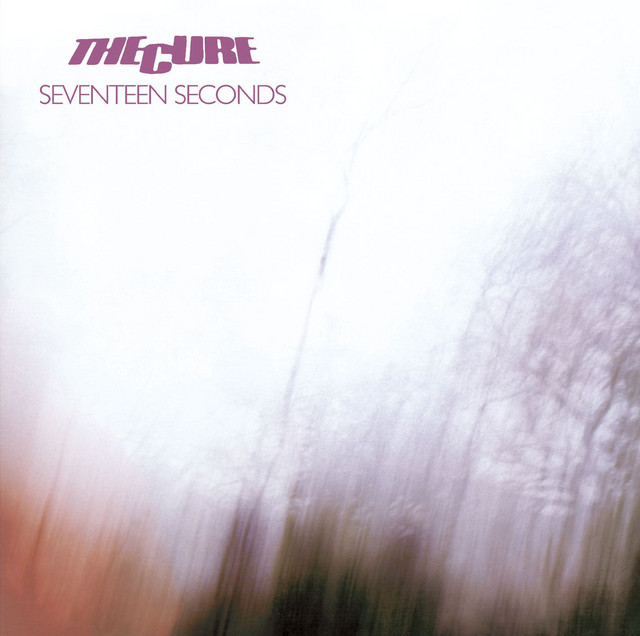
At a glance
- Artist
- The Cure
- Released
- 22 April 1980
- Label
- Fiction
- Catalogue number
- FIX 004
- Format
- 12″ Vinyl
- Country
- UK
- Tracks
- 10, 35:36
In the issue
The Cure's second album marked their turn from punk-pop toward atmospheric post-punk melancholy, a shift shaped in part by Robert Smith's stint filling in for Siouxsie and the Banshees after John McKay and Kenny Morris quit mid-tour in 1979. Learning the Banshees' material in soundchecks left Smith with a new sense of space and atmosphere that carried straight into his own band's sound.
How it was made
Seventeen Seconds was recorded at Morgan Studios in London in late 1979 and early 1980, produced by Mike Hedges and the Cure. Robert Smith had stripped the band to a three-piece—himself, bassist Simon Gallup, and drummer Lol Tolhurst—removing the pop elements of their debut Three Imaginary Boys. The album's sound was sparse and atmospheric, built around Smith's reverb-drenched guitar, Tolhurst's drum machines and keyboards, and Gallup's melodic bass. Tracks like "A Forest" and "Play for Today" were brooding and hypnotic, introducing the dark aesthetic that would define the Cure's subsequent work.
The album reached number 20 in the UK charts. "A Forest" became a top 40 single, proving that minimal, atmospheric post-punk could find mainstream audiences. Seventeen Seconds established the Cure as more than new wave popsters; they were serious artists exploring psychological darkness. The album's influence on gothic rock and alternative music was immediate, absorbed by bands seeking a template for atmosphere, texture, and emotional restraint.
Listen
Track list
- A1A Reflection2:09
- A2Play for Today3:41
- A3Secrets3:20
- A4In Your House4:08
- A5Three2:34
- B1The Final Sound0:52
- B2A Forest5:55
- B3M3:03
- B4At Night5:54
- B5Seventeen Seconds3:59
The label
Chris Parry's label released the Cure's Seventeen Seconds in 1980, the album that began the band's turn from spiky pop toward the atmospheric, melancholy sound of Faith and Pornography.
More by The Cure in the issues
- Pornography1982
- Disintegration1989