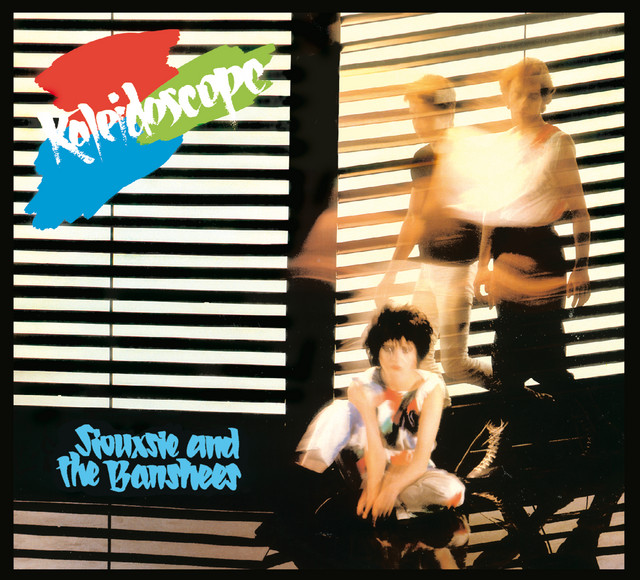
At a glance
- Artist
- Siouxsie and the Banshees
- Released
- 1 August 1980
- Label
- Polydor
- Catalogue number
- 2442 177
- Format
- 12″ Vinyl
- Country
- UK
- Tracks
- 11, 40:21
In the issue
The Banshees' third album pulled in synthesizers, sitars, and drum machines and still reached number 5 on the UK charts, widening post-punk's sonic range at a moment when the band's own future looked uncertain. It was recorded with the lineup assembled after John McKay and Kenny Morris quit mid-tour in September 1979, with Robert Smith of the Cure stepping in on guitar to save the tour by learning songs during soundchecks.
How it was made
Kaleidoscope was recorded at Nigel Gray's Surrey Sound Studios in early 1980, following the abrupt departure of guitarist John McKay and drummer Kenny Morris, who quit via postcard after a gig. Siouxsie and Severin recruited Budgie (Peter Clark) on drums and John McGeoch from Magazine on guitar, transforming the band's sound. McGeoch layered delay and chorus over arpeggios, scraped harmonics from open strings, built atmospheres instead of riffs. The album pulled in sitars on "Desert Kisses," synthesizers on most tracks, but kept the Banshees' serrated edge.
Producer Nigel Gray, known for his work with the Police, gave the band room to sprawl without smoothing out their bite. Kaleidoscope absorbed psychedelia, Middle Eastern modes, electronics—post-punk as a skeleton that could wear anything. The album reached number 5 in the UK charts. Difficult music, pop audience.
Listen
Track list
- A1Happy House3:52
- A2Tenant3:42
- A3Trophy3:19
- A4Hybrid5:32
- A5Clockface1:54
- A6Lunar Camel3:02
- B1Christine2:59
- B2Desert Kisses4:15
- B3Red Light3:22
- B4Paradise Place4:35
- B5Skin3:49
More by Siouxsie and the Banshees in the issues
- The Scream1978
- Juju1981
- A Kiss in the Dreamhouse1982