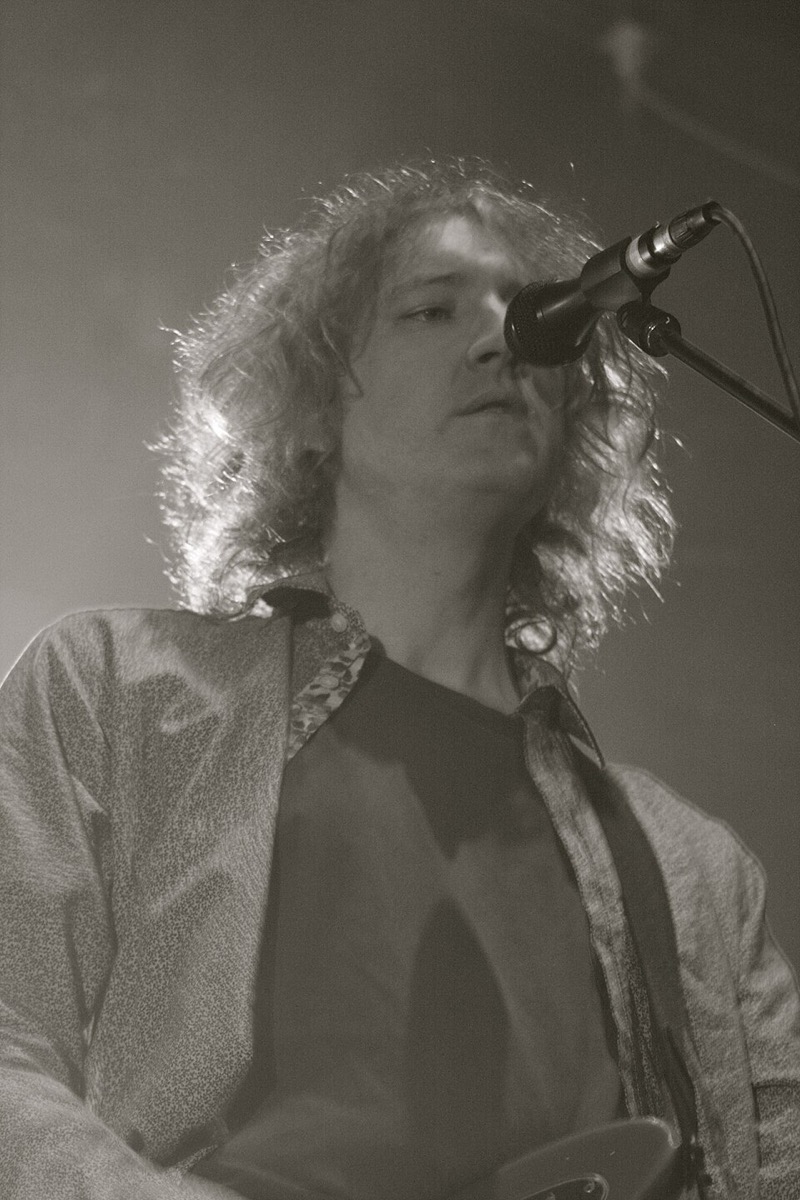
Shoegaze and Dreampop
When British guitarists turned effects pedals into orchestras and vocals into instruments, creating ethereal walls of sound that drowned the stage in reverb
The Scene
The sound existed before the word. In 1982, three teenagers from Grangemouth, Scotland walked into Palladium Studios in Edinburgh and cut Garlands, the Cocteau Twins' debut for 4AD. Robin Guthrie's guitar swam in effects—chorus, reverb, delay stacked until individual notes dissolved into shimmer. Elizabeth Fraser sang in a language she invented, pulling syllables from foreign dictionaries or simply making them up. This was the template: guitar as atmosphere, voice as texture. The following year, Robert Smith of Siouxsie and the Banshees stood motionless onstage during the Nocturne shows, letting sound flood outward. Slowdive's Simon Scott would later call it “anti-showmanship.” But in 1983, it was just Smith being weird. No one had connected the dots yet.
By 1985, the Jesus and Mary Chain weaponized the approach. Psychocandy married Phil Spector's Wall of Sound to feedback and distortion—pop melodies buried under sheets of beautiful noise. The album became a Rosetta Stone. Alan McGee, who released it on Creation Records, later noted that My Bloody Valentine “changed their style because of The Jesus and Mary Chain.” They weren't alone. Parallel to this, Spacemen 3 in Rugby and Loop in London were reviving 1960s space rock in droning, minimalist formations. Peter Kember of Spacemen 3 acknowledged they “could be called a shoegaze band” due to their static stage presence. The pieces were assembling: dream pop from Scotland, noise pop from East Kilbride, psychedelic minimalism from the Midlands.
Alan McGee, who released it on Creation Records, later noted that My Bloody Valentine "changed their style because of The Jesus and Mary Chain." They weren't alone.
The convergence happened between 1989 and 1991 in the Thames Valley—Oxford, Reading, their orbital towns—and London's club circuit. Not punk's urban decay. Not acid house's warehouse rush. Art college kids in provincial England making music in converted garages and borrowed studios. Second-hand Jaguars and Jazzmasters. Cheap Boss and Electro-Harmonix pedals. An appetite for the Wall of Sound filtered through post-punk austerity. When Ivo Watts-Russell signed Lush and Pale Saints to 4AD after seeing them at The Camden Falcon in April 1989, the scene was forming. Ride assembled in Banbury that year, writing songs in student digs. Slowdive emerged from Reading, named after a Siouxsie single.
The music press needed a label. In March 1991, Andy Ross attended a show at the Venue in New Cross: Lush, Blur, Moose. Watching Moose's Russell Yates stare at the floor—actually reading lyric sheets he'd placed there because he couldn't remember the words—Ross joked about “shoegazers” to his assistant Polly Birkbeck. By May, Steve Lamacq used “shoe-gazers” in NME to describe Slowdive. That June, Melody Maker's Steve Sutherland attended a Moose show at Camden Underworld. The audience: packed with members of Ride, Lush, Chapterhouse, Blur. All there to watch each other. Sutherland coined “The Scene That Celebrates Itself,” meaning it as praise—bands supporting bands, which was unusual then. The press turned it into a pejorative within weeks. Both terms stuck. Shoegaze had arrived, fully formed and already under attack from journalists who'd soon champion Britpop's laddish swagger over the scene's introspective androgyny.
Key Players
Kevin Shields was shoegaze's mad scientist. The Dublin-born guitarist formed My Bloody Valentine in 1983, but the band didn't locate its voice until 1988's You Made Me Realise EP. That's when Shields developed his “glide guitar” technique: tremolo arm manipulations combined with reverse digital reverb from an Alesis Midiverb II, creating that signature warping effect. His 1991 masterpiece Loveless reportedly cost £250,000—enough to nearly bankrupt Creation Records. “Kevin went into the studio in 1989 and came out in 1991,” Alan McGee said later. The production techniques became gospel: burying Bilinda Butcher's vocals, layering guitars until they became orchestral, using Akai samplers to manipulate feedback. Shields cited hip-hop as influence, specifically Public Enemy and the Bomb Squad, drawn to sounds that felt “half-buried or muted, a real sense of sounds being semi-decayed, or destroyed, but then re-used.” His rig at its peak: 30+ effects pedals feeding multiple amplifiers set to maximum volume for sustain. During live performances of “You Made Me Realise,” the band would perform a noise interlude reaching 130 decibels. “My hearing isn't gonna be really good in five years,” Shields told Rolling Stone in 2017. “It's a downward spiral from now on.”
Neil Halstead and Rachel Goswell were shoegaze's unlikely pop classicists. Childhood friends from Reading who'd performed in school musicals, they formed Slowdive in October 1989 while attending art college in Banbury. Where My Bloody Valentine assaulted, Slowdive seduced. Their 1993 album Souvlaki featured Brian Eno on two tracks after Halstead wrote him requesting collaboration. “The first thing he did when he walked into the studio was to rip the clock off the wall and put it by the mixing desk,” Halstead remembered. “He then said 'Okay, you're going to play the guitar and I'm going to record it. I don't care what you are going to play, just play something.'” Halstead called the session “one of the most surreal stoned experiences of my life.” But Souvlaki's release coincided with the shoegaze backlash. Melody Maker's Dave Simpson wrote he'd “rather drown choking in a bath full of porridge” than listen to it. Manic Street Preachers' Richey Edwards proclaimed, “We will always hate Slowdive more than Hitler.” The band was devastated. They broke up in 1995, not reuniting for 19 years.
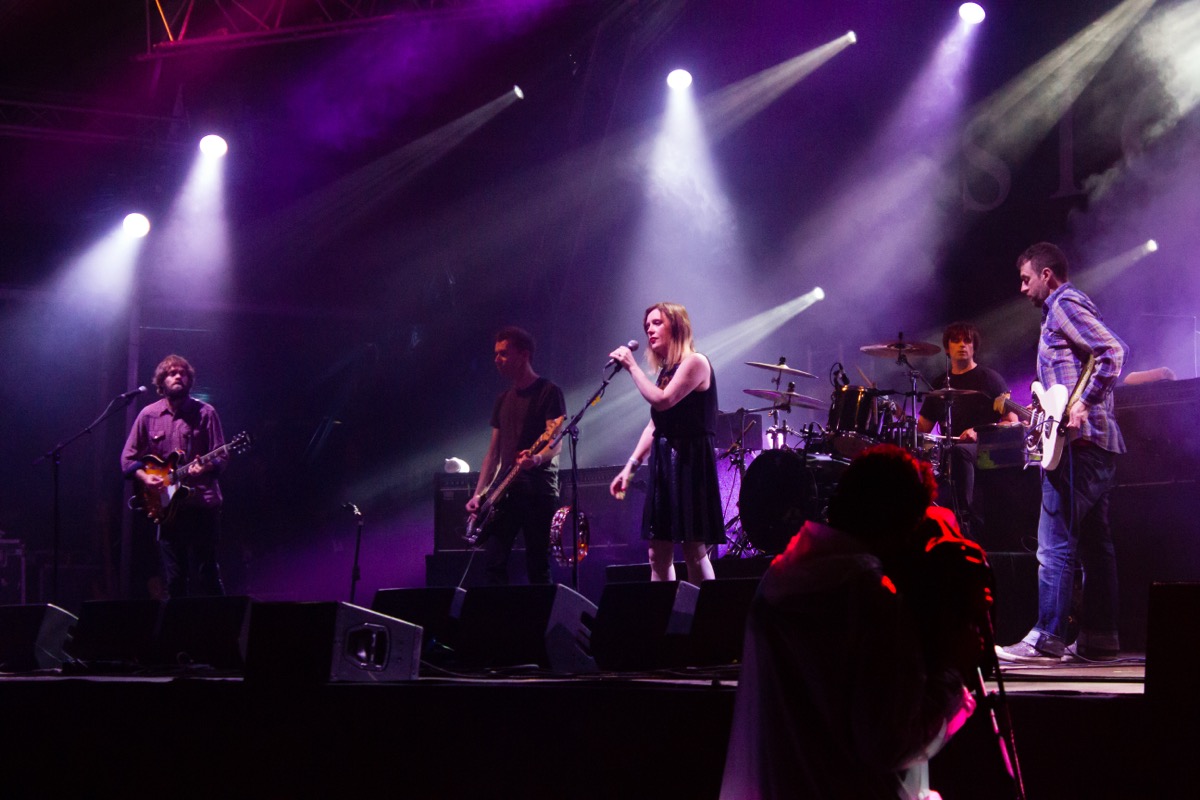
Slowdive reunited. The Thames Valley dreamers whose Souvlaki was ignored on release, then canonised by a generation who discovered it too late.
Robin Guthrie was the sound's architect before it had a name. The Cocteau Twins guitarist pioneered swirling, effects-heavy production that made vocals and guitars indistinguishable, each element swimming in reverb. His work with Elizabeth Fraser—whose invented language vocals became template for the genre's wordless approach—established the 4AD aesthetic that would house Lush, Pale Saints, countless others. Guthrie's Wall of Sound fixation and his production work on Lush's Mad Love EP refined the band's chaotic early sound into something “beautiful, primitive.” He was also shoegaze's most direct link to its cinematic future: his score for Sofia Coppola's Lost in Translation (2003) brought the sound to Oscar-winning heights.
Alan McGee built the empire shoegaze nearly destroyed. The Creation Records founder signed My Bloody Valentine in 1988 after seeing them support Biff Bang Pow! in Canterbury. “Alan really liked it which I think genuinely surprised him,” bassist Debbie Googe recalled. He also signed Ride, releasing their first three EPs in 1990 before their debut Nowhere became one of the genre's defining statements. But McGee's relationship with his bands was fraught. He dismissed 40 songs Slowdive recorded for Souvlaki as “all shit,” forcing them to start over. After Loveless's production costs spiraled, he dropped My Bloody Valentine. When Sony partially acquired Creation in 1992, there was “enormous pressure on the label to make every band profitable,” according to Adorable's Pete Fijalkowski. McGee's pivot to Britpop—signing Oasis in 1993—was the final nail.
Defining the Sound
Phil Spector's Wall of Sound run through Marshall stacks and Boss pedals, then smeared with Vaseline. The core: layers of heavily distorted, effects-processed guitars creating a wash where individual notes dissolved into texture. Kevin Shields' glide guitar became signature. He'd customize Fender Jaguar and Jazzmaster tremolo systems, extending the arm to enable extreme pitch bends. Combined with reverse digital reverb—sourced from rack units like the Yamaha SPX90 and Alesis Midiverb II—and analog distortion, the result was sound that “wandered in and out of focus,” as Rolling Stone put it. This wasn't traditional guitar heroics. Shields openly admitted his reliance on effects stemmed from technical limitations. But he turned weakness into revolution. His rig at its peak: 30 effects pedals feeding multiple amplifiers set to maximum volume for sustain, creating feedback he'd sample and play back via Akai samplers.
The rhythm section was often minimal—a drum machine or simple pattern—freeing the guitars to become everything. My Bloody Valentine experimented with samplers around 1990's Glider EP, using them to manipulate their own feedback and vocals. By Tremolo (1991), they'd fully integrated the Akai, turning the studio into instrument. Shields cited hip-hop production as inspiration—particularly Public Enemy and the Bomb Squad—drawn to sounds that felt “half-buried or muted, a real sense of sounds being semi-decayed, or destroyed, but then re-used.” Crucial: shoegaze wasn't just rock with effects. Conceptually closer to dub, to ambient techno, to anything that privileged texture and space over verse-chorus-verse.
By Tremolo (1991), they'd fully integrated the Akai, turning the studio into instrument.
Vocals sat low in the mix, often androgynous and unintelligible. Bilinda Butcher's dreamy delivery on Loveless came from being woken in the middle of the night to record takes. Elizabeth Fraser sang in glossolalia—words invented or pulled from foreign language books—turning voice into pure sound. Slowdive's Neil Halstead and Rachel Goswell would spend eight to ten hours writing lyrics that often remained obscure anyway. The point wasn't what was being said but how it felt. Vocals becoming another layer in the sonic blur. Critics described this as “a paradoxical blend of force and tenderness”—aggressive in volume and density, tender in mood and melody.
Instruments: Fender Jaguars and Jazzmasters were guitars of choice. Their tremolo systems crucial for Shields' techniques. Their relatively affordable price perfect for art students. Boss, Electro-Harmonix, similar budget pedal brands supplied distortion, chorus, delay. Amps were often Fender or Marshall, cranked loud. Studios like Blackwing in South London (where Loveless was partially recorded) became temples. Though many early recordings happened in makeshift spaces—Alan Furlong's rehearsal rooms near Temple Bar in Dublin, a four-track in a converted Oxfordshire garage. The lo-fi origins were part of the aesthetic. Not pristine production but controlled chaos. Beauty emerging from layers of beautiful noise.
Stories
The Loveless sessions became shoegaze's creation myth. A two-year descent into studio madness producing the genre's Sgt. Pepper's. Kevin Shields entered the studio in 1989 with a vision that consumed him. He'd record a guitar part, listen back, decide it wasn't right, strip the tape, start again. Engineers hired and fired. Studios booked and abandoned—nineteen in total. Creation Records' accountants watched bills pile up: £250,000, a staggering sum. “When we started, I was borrowing money from myself when I should have been paying tax bills,” Shields told Rolling Stone years later. “Instead, I was like, 'No, let's do this. It will only take six months.'” It wound up taking roughly two years. But what emerged was transcendent. “Soon”—released on the Glider EP in 1990—reached number 2 on the UK Indie Chart despite being, in Brian Eno's words, “the vaguest music ever to have been a hit.” When Loveless finally arrived in November 1991, press reaction was muted, overshadowed by grunge. Among musicians, though, it was revelatory. Billy Corgan called it the template for Siamese Dream. Decades later, Pitchfork would call it “the Citizen Kane of shoegaze.” McGee dropped My Bloody Valentine shortly after, unable to afford another Kevin Shields production.
Slowdive's Souvlaki sessions in 1992 were equally tortured but for different reasons. The band recorded and scrapped 40 songs after Alan McGee told them “they're all shit.” Demoralized, they retreated to Oxfordshire and started over. Then Neil Halstead wrote Brian Eno a letter asking him to produce. Eno responded: he liked their music but wanted to collaborate, not produce. The session was surreal. “The first thing he did when he walked into the studio was to rip the clock off the wall and put it by the mixing desk,” Halstead remembered. “He then said 'Okay, you're going to play the guitar and I'm going to record it. I don't care what you are going to play, just play something.'” Two songs emerged: “Sing,” co-written with Eno, and “Here She Comes,” where Eno played keyboards. Halstead later called it “one of the most surreal stoned experiences of my life.” But the album's release coincided with peak backlash. Melody Maker's Dave Simpson wrote he'd “rather drown choking in a bath full of porridge” than listen to it. The band was devastated. Within three years, they'd be dropped by Creation and broken up. Nineteen years before reuniting.
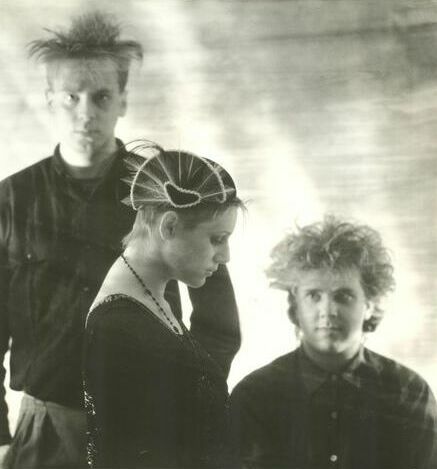
Cocteau Twins, 1986. Elizabeth Fraser's otherworldly vocals and Robin Guthrie's shimmering guitar effects invented dreampop before the term existed.
The Slough Festival in July 1991 was shoegaze's Woodstock. Though at the time it felt more like funeral. Headlined by Ride and featuring Slowdive, Curve, Revolver, Thousand Yard Stare, the event drew members of Lush and Chapterhouse. Should have been coronation. But by then, British press had turned. NME ran “Memoirs of a Shoegazing Gentleman,” a satirical column narrated by the fictional Lord Tarquin, mocking bands as privileged public school kids. (Many weren't—Ride were from Oxford comprehensives, Slowdive from Reading—but facts didn't matter.) That summer, Chapterhouse toured Europe, sharing stages with Nirvana at Ein Abend in Wien in Rotterdam. The contrast was stark: Kurt Cobain's anguished howl versus Neil Halstead's whispered lullabies. Grunge's raw emotion and working-class authenticity made shoegaze seem effete, decadent, out of time. By early 1992, Melody Maker was championing Suede as “The Best New Band in Britain.” Britpop rising. The Scene That Celebrates Itself was over.
The reunions in the 2010s revealed how much the narrative had shifted. When My Bloody Valentine played their first show in 16 years at London's ICA in June 2008, the venue packed with younger fans who'd discovered the band through the internet. Shields was stunned. “We spent £200,000 on equipment for the tour,” he said, because they wanted to recreate the live sound properly. The shows were rapturous. When m b v finally arrived in February 2013—released with no warning via the band's website—it crashed the servers. Critics called it “universal acclaim.” Slowdive's reunion was even more triumphant. When they reunited in 2014 for Primavera Sound, Neil Halstead and Rachel Goswell expected modest turnout of nostalgic fans. What they found stunned them: thousands of people, many in their twenties, singing along to every word of songs released before they were born. Their 2017 self-titled album entered the UK top 10, something they'd never achieved first time around. By 2023's Everything Is Alive, they were headlining festivals, playing to crowds ten times larger than in the 1990s. The music once dismissed as dreary and elitist had become canonical.
Legacy and Influence
Shoegaze's DNA runs through contemporary music in ways both obvious and hidden. Direct descendants are clear: the nu gaze revival of the 2000s (M83, Asobi Sekasu, Ulrich Schnauss) and the 2010s shoegaze revival revival (DIIV, Beach House, Nothing). But the influence goes deeper. Deafheaven's 2013 album Sunbather—which merged black metal with shoegaze's textural approach—spawned the entire blackgaze subgenre. The Smashing Pumpkins built their early sound on it. Billy Corgan called Gish's closing track “Daydream” “a complete rip-off of the My Bloody Valentine sound.” Siamese Dream and Mellon Collie explicitly borrowed Loveless's layered production. Deftones, Quicksand, Thursday brought shoegaze's atmospherics into metal and post-hardcore. Even hip-hop and R&B absorbed it: the Weeknd sampled Cocteau Twins, while producers like Clams Casino and Travis Scott's collaborators use shoegaze's reverb-drenched textures as backdrop for trap beats.
The production techniques became ubiquitous. Reverse reverb, extreme tremolo manipulation, vocals buried in the mix—standard tools now, used by artists who may never have heard of Ride or Slowdive. Kevin Shields' work on Lost in Translation introduced the sound to a generation via Sofia Coppola's dreamy cinematography. Gregg Araki titled films after Jesus and Mary Chain and Ride releases (The Living End, Nowhere) and used shoegaze extensively in soundtracks, hiring Robin Guthrie for Mysterious Skin. The aesthetic migrated to other media: the genre's visual style—abstract album covers, close-ups degraded to colored blurs, fusions of images through color filters—influenced graphic design and music video aesthetics for decades.
Deftones, Quicksand, Thursday brought shoegaze's atmospherics into metal and post-hardcore.
Shoegaze's resurrection in the 2020s feels less like nostalgia than vindication. Younger artists—sometimes called “zoomergaze”—discovered the music through streaming and TikTok, creating a global scene spanning Peru (Resplandor), Russia (Gnoomes), Japan (Tokyo Shoegazer), Australia (Flyying Colours), Hong Kong (Lucid Express). The genre's inward focus and androgynous presentation resonates with Gen Z's fluid approach to identity. Its anti-showmanship feels like rebuke to social media's performative demands. Its emphasis on texture over technical virtuosity aligns with bedroom production culture, where anyone with a laptop and VST plugins can create walls of sound. What was once dismissed as insular and regressive now feels prescient—music built for headphones, for solitary listening, for getting lost in sound. The scene that celebrated itself now belongs to everyone.
Post-Punk
Shoegaze emerged directly from post-punk's experimental approach to guitar, particularly Siouxsie and the Banshees' atmospheric textures and the Cure's layered production.
Dream Pop
While often conflated, dream pop allows more melodic space where shoegaze creates walls of sound; Cocteau Twins bridged both aesthetics, influencing the entire scene.
Britpop
Britpop's rise in 1992-1993 directly caused shoegaze's commercial decline as the press embraced Suede and Blur's laddish swagger over shoegaze's introspective androgyny.
Grunge
American grunge's raw emotion and working-class authenticity overshadowed shoegaze internationally in 1991-1992, making the British sound seem effete and out of time.
Blackgaze
Deafheaven's 2013 album Sunbather merged black metal with shoegaze's textural approach, spawning the blackgaze subgenre and introducing the sound to extreme metal audiences.