Tangerine Dream
Edgar Froese's ensemble kept reshaping itself for years, starting as psychedelic experimentalists before settling into kosmische musik's defining act. Signed to Virgin Records, they built Phaedra and Rubycon from sequenced Moog synthesizers that drifted out of tune as studio equipment heated up during long sessions, turning an unstable analog fault into an organic, breathing texture. Christopher Franke and Peter Baumann joined Froese for that classic mid-70s period, and their space music sound arrived largely by accident: on Phaedra, the band left the tape rolling while simply testing a newly acquired Moog, and the drifting oscillators they caught turned out more interesting than anything planned.
At a glance
- Active
- 1967–present
- From
- Berlin, West Germany
- Records in the issues
- 2 (1974–1975)
- Original label
- Virgin
- Listening guide track
- “Search”
Listen
In the German Krautrock listening guide: “Search”
In the issues
- German KrautrockPrincipal · 1968-1975
German Krautrock is a music scene from West Germany (Düsseldorf, Cologne, Berlin), 1968–1975. Its principal artists include Kraftwerk, Can, Neu! and Tangerine Dream. This issue covers 10 essential albums and 12 dated events.
Records
Phaedra
1974 · Go deeper in German KrautrockOriginal release: Virgin · V 2010 · 12″ Vinyl · UK 1974Their first release for Virgin Records reached the UK Top 15. Its sequencer-driven textures, and the accidentally recorded drift of oscillators as studio temperatures shifted, defined the ambient aesthetic of kosmische musik for a generation of listeners.
Listen on SpotifyRubycon
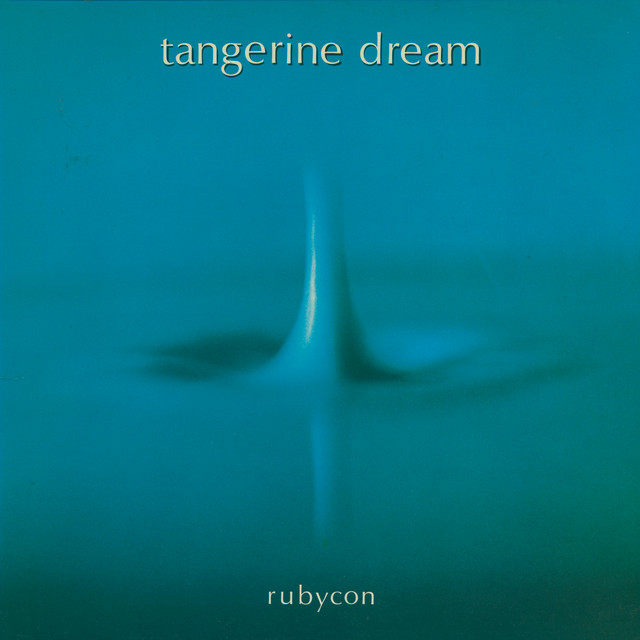
1975 · For the obsessed in German KrautrockOriginal release: Virgin · Vinyl · Germany 1975The follow-up to Phaedra reached the UK Top 20 with two side-long pieces built from sequenced synthesizers and Mellotron. Its drifting, unstable analog textures, shaped as much by temperature fluctuations in the studio as by deliberate composition, effectively wrote the template that new-age music would follow for the next two decades.
Listen on Spotify

Family tree
Bands that shared members with Tangerine Dream, and who.
- Eruption1974–Conrad Schnitzler, Klaus Schulze
Places
- Zodiak Free Arts LabWest Berlin · 1967-1969 · German Krautrock
A countercultural commune and venue where Tangerine Dream, Ash Ra Tempel, and Agitation Free performed extended psychedelic improvisations, incubating Berlin's experimental music scene.
- Dierks StudiosStommeln · 1969-present · German Krautrock
A farmhouse studio near Cologne where Tangerine Dream recorded Alpha Centauri, Zeit and Atem, offering isolated space for extended electronic experimentation.