Bikini Kill
Bikini Kill formed in Olympia in October 1990, and from the start their shows played out like small wars. Tobi Vail remembered guys trying to beat them up, no security in sight, 600 kids crammed into bowling alleys with nowhere to go. Kathleen Hanna's confrontational vocals and feminist lyrics, delivered with a DIY ethos borrowed from Olympia's small-label punk scene, made the band the movement's most visible voice. Hanna has said that when she arrived in Olympia, the kids making music there defined punk not as a sound but as an idea: that nobody needed a corporation's permission to make art, as she told KQED. Girls showed up to Bikini Kill's all-ages shows and cried, she recalled, because it was the first time they'd stood in an all-female room and felt the walls change shape around them. The band released Revolution Girl Style Now in 1991 and Pussy Whipped in 1993 before disbanding in 1997. They reformed in 2019 after Hanna's successful treatment for Lyme disease, and she has described the new shows as carrying so much more joy alongside the old anger, the songs revealing nuances she never knew were there.
At a glance
- Active
- 1990–1997, 2019–present
- From
- Olympia, Washington, USA
- Records in the issues
- 3 (1991–1993), 3 of them a Start here pick
- Original labels
- [no label] and Kill Rock Stars
- Listening guide track
- “Rebel Girl”
Listen
In the Riot Grrrl listening guide: “Rebel Girl”
In the issues
- Riot GrrrlPrincipal · 1988-1996
Riot Grrrl is a music scene from Olympia, Washington & Washington, D.C., USA, 1988–1996. Its principal artists include Bikini Kill, Bratmobile and Sleater-Kinney. This issue covers 10 essential albums and 15 dated events.
Records
Revolution Girl Style Now
1991 · Start here in Riot GrrrlOriginal release: [no label] · Cassette · US 1991This self-released demo cassette, recorded in summer 1991, opens with Hanna's voice cutting through hiss, fuzz, and feedback screech: "We're Bikini Kill and we want revolution, girl style, now." It set the template for riot grrrl's lo-fi sound and its confrontational feminist manifesto in eight songs and barely any studio polish.
Listen on SpotifyBikini Kill EP
1992 · Start here in Riot GrrrlProduced by Ian MacKaye and released on Kill Rock Stars in October 1992, exactly twenty years before Bikini Kill began reissuing their catalog themselves. The EP carried riot grrrl out of Olympia's underground and into indie rock's wider ear, MacKaye's production giving the band's fury a cleaner edge without sanding it down.
Listen on SpotifyPussy Whipped
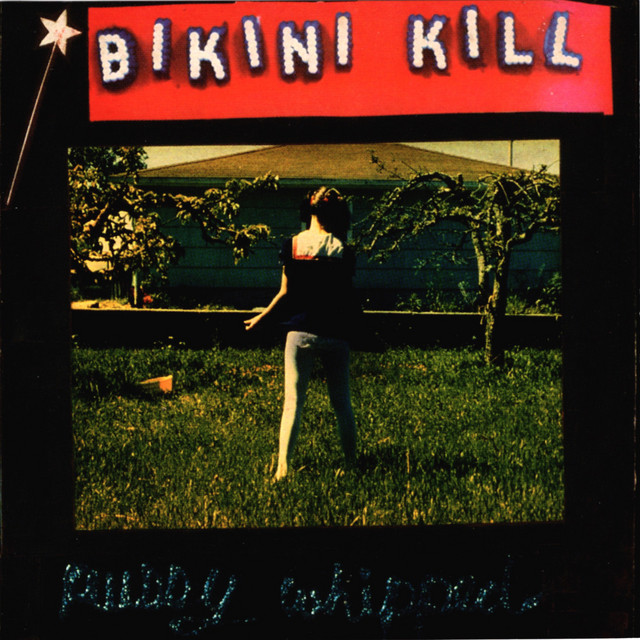
1993 · Start here in Riot GrrrlOriginal release: Kill Rock Stars · KRS-218 · CD · US 1993Bikini Kill's debut album gave the movement its most enduring anthem in "Rebel Girl." Hanna has said she has lost count of how many times someone has told her, "When I was 15 years old, Pussy Whipped saved my life," and that feeling like she was part of a 15-year-old's survival through high school means more to her than any record sale or magazine cover, as she told Dazed. The initial reviews from underground magazines were brutal, but by the time the band reached the UK in 1993, riot grrrl had become an international story, and Pussy Whipped was its central document.
Listen on Spotify

Family tree
Bands that shared members with Bikini Kill, and who.
- The Julie Ruin2010–Kathi Wilcox, Kathleen Hanna
- Le Tigre1998–Kathleen Hanna
Places
- 9:30 ClubWashington D.C. · 1980-present · Riot Grrrl
The iconic D.C. venue where riot grrrl bands like Bikini Kill performed alongside the city's established hardcore punk scene, bridging punk's past and feminist future.
Voices
Quotations from the issues, each matched word for word against the source it links to.
“I really thought that all the girls would start bands. You know, I just was like, we'll just tell them to do it and we'll help them and they'll want to do it because it'll be really fun.”
“We prioritized having girls and women come up to the front, because a lot of the shows we were playing back then, it was straight, cisgender white guys predominating and taking up all the space of the room.”
“But I regret coming off as a leader too much and feel like I should have made better decisions in terms of making sure the movement was more accessible to women of colour who wanted to be involved. That always really bothers me – it's a massive regret.”