At a glance
- Artist
- Haruomi Hosono
- Released
- 1978
In the issue
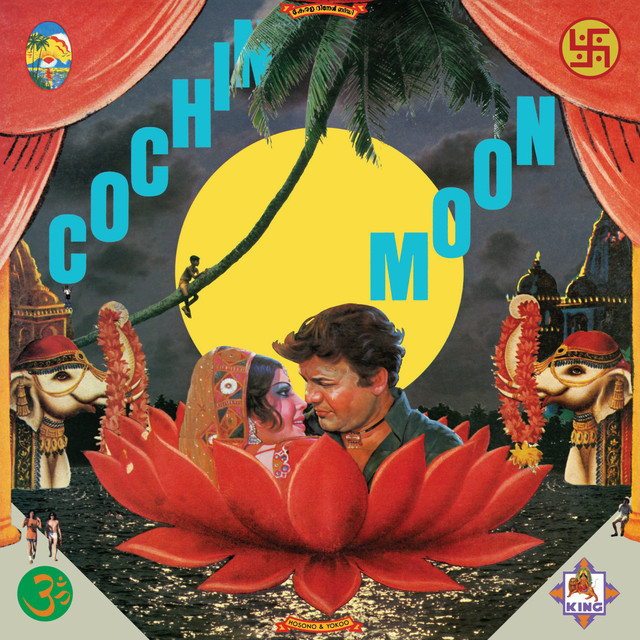
Experimental "electro-exotica" soundtrack demonstrating genre's capacity for playful boundary-pushing. Created after Hosono visited India and returned fascinated by Bollywood cinema's exotic aesthetic, with Tadanori Yokoo designing artwork and Ryuichi Sakamoto and Hideki Matsutake joining in the studio. A soundtrack for a film that didn't exist, imagining an alternate Bollywood through Japanese synthesizers. Tracks layered tabla samples, synthesizer arpeggios, and lounge-jazz grooves into something playful, bizarre, utterly confident in its own absurdity. It didn't chart, but it established Hosono as an artist willing to follow ideas wherever they led, showing how synthesizers and Pacific sounds could be incorporated into accessible pop frameworks.
How it was made
Conceived as a soundtrack for a fictional Bollywood film, Cochin Moon was recorded in 1978 at Alfa Studio with contributions from Ryuichi Sakamoto and Hideki Matsutake, who programmed the Yamaha CS-80 and ARP Odyssey synthesizers that gave the album its electronic texture. Hosono later explained he was interested in creating music for 'India that never existed'—an imaginary place combining Indian musical influences with electronic futurism and Japanese sensibilities. The sessions were experimental. Hosono encouraged musicians to improvise and explore sounds without strict commercial parameters. Upon release, Cochin Moon baffled reviewers and sold poorly—too weird for pop audiences, too pop for experimental music fans. Over time, the album gained recognition as pioneering 'electro-exotica,' influencing electronic music and sample culture far beyond Japan. It represents city pop's experimental frontier, proving the genre's boundaries were more porous than its commercial face suggested.
Listen
Find a copy
More by Haruomi Hosono in the issues
- Hosono House1973