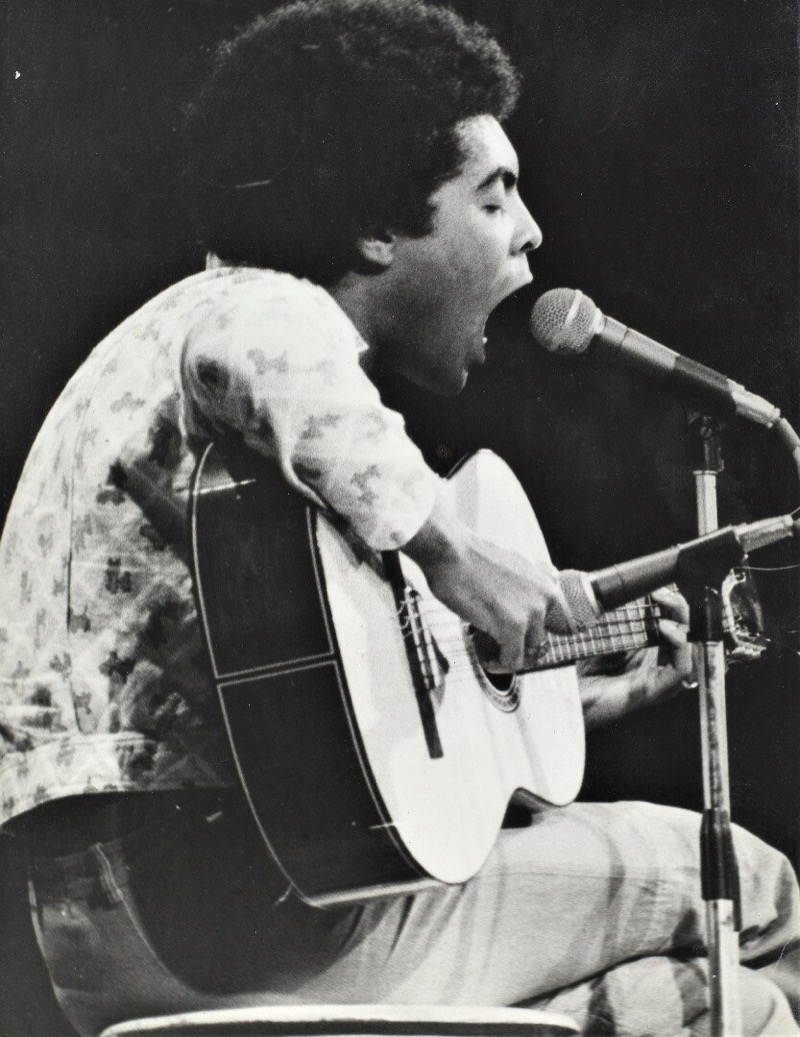
Brazilian Tropicália
How a group of Bahian musicians fused psychedelia, samba, and avant-garde provocation to create Brazil's most radical cultural movement—and paid for it with exile
- Era
- 1967-1972
- Region
- Salvador and São Paulo, Brazil
- Key Artists
- 4
- Albums
- 10
The Scene
The seeds weren't planted in São Paulo's concrete, but in Bahia's sertão—the dry backcountry where accordion music crackled through radios and street performers worked Salvador's Afro-Brazilian neighborhoods. Gilberto Gil grew up in Ituaçu in the 1940s and 50s listening to Luiz Gonzaga's forró, music that came, as he'd later describe it, "beneath the mud of the earth." Caetano Veloso, born in Santo Amaro da Purificação in 1942, was seventeen when João Gilberto's bossa nova records arrived—"my supreme master," he'd call him, an illumination of what Brazilian tradition could become. Tom Zé came from Irará, smaller still, a town he called "pre-Gutenbergian" where information moved by mouth. These were the proto-tropicalistas: Northeast children carrying the friction between rural tradition and urban modernity into their art like contraband.
Key Artists
Essential Albums
7-day free trial, then $5/month. Cancel anytime.