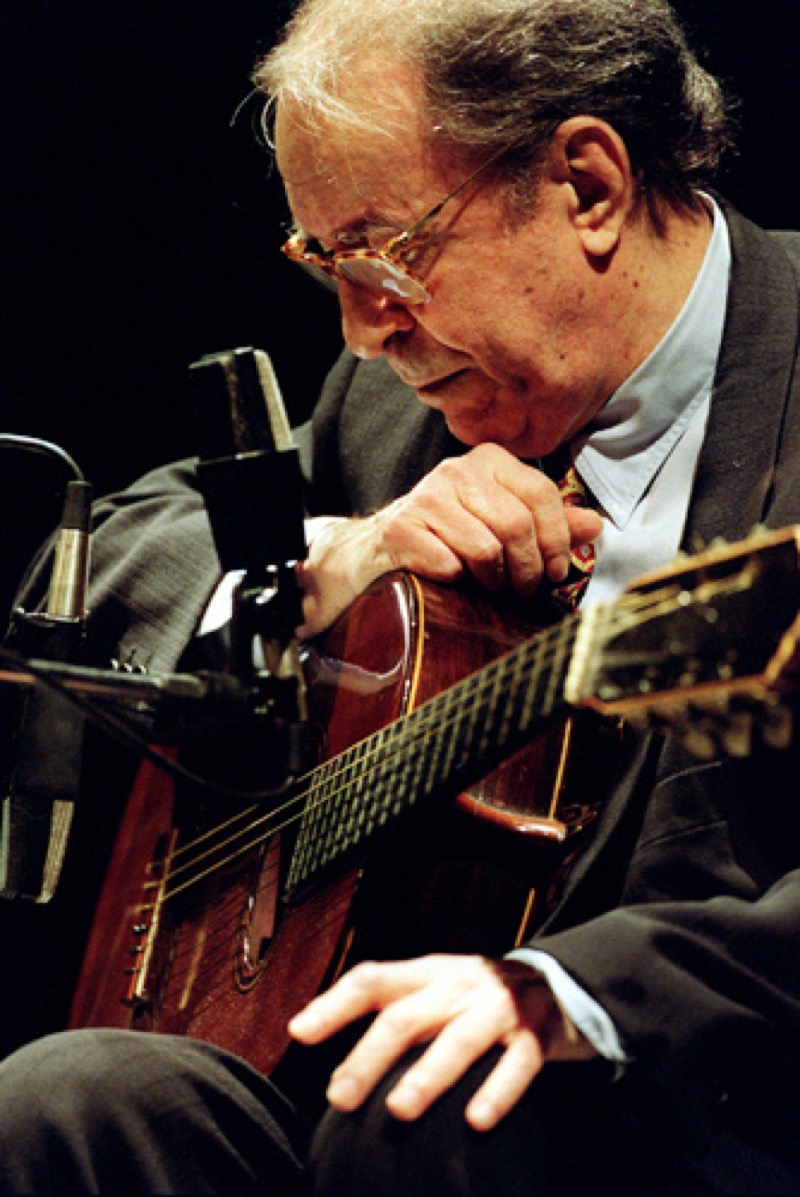
Bossa Nova
How João Gilberto's bathroom experiments and Rio's beach culture created a quiet revolution that seduced the world
- Era
- 1956-1964
- Region
- Rio de Janeiro, Brazil
- Key Artists
- 3
- Albums
- 9
The Scene
The seeds were already planted in Rio's samba tradition, long before anyone locked themselves in a bathroom to reimagine the guitar. In the early 1920s, samba guitarists were experimenting with complex chord structures—harmonic sophistication that would later define bossa nova. This wasn't borrowed from jazz. Parallel evolution, two traditions reaching similar conclusions from different directions. By the late 1940s, singers like Dorival Caymmi were developing something more intimate, trading the operatic projection of traditional samba for something quieter, closer to speech. The microphone and amplifier arrived in Brazil. Suddenly you didn't need to belt to be heard.
Key Artists
Essential Albums
7-day free trial, then $5/month. Cancel anytime.